

Box Jumps: Build Power, Speed and Confidence
Box jumps are one of the most effective movements for developing explosive power, coordination and athleticism. Whether you're new to functional fitness or an experienced CrossFit athlete, box jumps can challenge your ability to produce force quickly while also improving your confidence and movement skills.
They might look simple, but there’s plenty of technique involved in performing them safely and efficiently.
What Is a Box Jump?
A box jump involves jumping from the floor onto a stable raised platform, landing with both feet on top before standing tall.
The movement combines a powerful extension of the hips, knees and ankles with a controlled landing. Because you're producing force quickly, box jumps are a great way to train power rather than simply strength.
The Benefits of Box Jumps
1. Develop Explosive Power
Box jumps teach your body to produce a large amount of force in a short period of time. This explosive ability can carry over to other movements, sports and everyday activities.
2. Improve Coordination
A successful box jump requires your arms, legs and core to work together. Over time, this can improve overall body awareness and coordination.
3. Build Lower-Body Strength
Although box jumps are primarily a power movement, they also challenge the muscles of the legs and hips, including the glutes, quadriceps and hamstrings.
4. Improve Cardiovascular Fitness
Add box jumps into a conditioning workout and you'll quickly discover how demanding they can be. Repeated jumps elevate your heart rate and can provide a serious conditioning stimulus.
5. Build Confidence
Progressing from a lower box to a higher box can be a great way to build confidence in your ability to move explosively. Learning to commit to the jump and land under control is an important part of developing athletic confidence.
How to Perform a Box Jump
1. Start with your feet approximately hip-width apart.
Stand a comfortable distance away from the box with your eyes focused ahead.
2. Load your hips.
Bend your knees and hips slightly while swinging your arms backwards.
3. Jump explosively.
Drive through the floor and swing your arms forward as you extend your hips and knees.
4. Land softly.
Aim to land with both feet securely on the box. Keep your knees controlled and absorb the landing rather than crashing onto the surface.
5. Stand tall.
Once you're stable, extend your hips and stand fully upright.
6. Step down safely.
For most training situations, stepping down from the box is preferable to jumping down repeatedly. This can help reduce unnecessary impact and keep your movement consistent.
Quality Over Height
One of the biggest mistakes people make with box jumps is thinking that higher always means better.
It doesn't.
The goal is to develop explosive power while maintaining excellent movement quality. Choose a box height that allows you to jump confidently, land under control and maintain good positioning.
As your strength, power and confidence improve, the height can gradually increase.
Box Jumps Can Be Scaled
Box jumps don't have to be intimidating. There are several ways to scale the movement depending on your experience and ability.
Beginner: Lower box or step-ups
Intermediate: Standard box jumps
Advanced: Higher box jumps or increased repetitions
Step-ups are an excellent option for anyone who isn't ready to jump yet. They allow you to develop the movement pattern and build strength and confidence before introducing explosive jumping.
Common Box Jump Mistakes
Jumping onto a box that's too high
If you're forced into a deep squat just to get onto the box, reduce the height.
Landing stiffly
Try to absorb the landing with control rather than landing heavily.
Knees collapsing inward
Maintain control through the hips and knees throughout the jump and landing.
Jumping down every repetition
Stepping down can help manage impact and allows you to reset before the next rep.
Prioritising speed over technique
Fast repetitions aren't useful if your landing position and movement quality are breaking down.
Ready to Jump?
Box jumps are a fantastic way to develop power, coordination, fitness and confidence. They can be scaled to suit almost any fitness level and progressively developed as your abilities improve.
Whether you're stepping onto a low box for the first time or working towards a new height, focus on one thing above all else: quality movement.
Build the skill, develop the power and the height will come.
At the gym, our coaches can help you choose the right variation and box height for your current ability, so you can progress safely and confidently.
Wall Balls: The Simple Movement That Builds Serious Fitness
At first glance, wall balls look simple: squat, throw, catch, repeat.
But anyone who has completed a high-rep set knows just how challenging they can be.
Wall balls combine a squat with an explosive throw, creating a full-body movement that develops strength, power, coordination, stamina and cardiovascular fitness. They are a staple of CrossFit training because they allow you to challenge multiple physical qualities at the same time.
What Is a Wall Ball?
A wall ball is performed by holding a weighted medicine ball at your chest, squatting down and then driving explosively through your legs and hips to throw the ball towards a target.
As the ball comes back down, you catch it and immediately move into your next squat.
The movement is essentially a front squat combined with a push press and throw.
That combination is what makes the wall ball so effective. Rather than isolating one muscle group, you are transferring force from the ground, through your legs and hips, through your core and into your upper body.
Why Are Wall Balls So Effective?
1. They Train Your Whole Body
Wall balls involve the quads, hamstrings, glutes, core, shoulders, chest and arms.
The legs generate most of the initial power, while the upper body finishes the movement by directing the ball towards the target. Your core acts as the link between the lower and upper body, helping transfer that force efficiently.
2. They Build Explosive Power
A good wall ball isn't just about standing up from a squat.
You need to accelerate out of the bottom of the squat and use your hips and legs to generate momentum before finishing the throw with your arms.
This teaches your body to produce force quickly — an important component of athletic performance.
3. They Improve Cardiovascular Fitness
Try 30 wall balls at a controlled pace and your heart rate will quickly tell you that this isn't just a strength exercise.
Because wall balls combine a large range of motion with repeated explosive efforts, they can provide a significant cardiovascular and conditioning stimulus.
This is why wall balls can become particularly challenging in workouts where you are performing high repetitions or combining them with movements such as running, rowing, burpees or box jumps.
4. They Develop Coordination
There is a lot happening in one wall ball repetition.
You need to squat, drive through your legs, extend your hips, transfer the force through your torso, throw the ball, track it with your eyes, catch it and immediately prepare for the next repetition.
With practice, these movements become one smooth, coordinated action rather than a collection of separate movements.
How to Perform a Better Wall Ball
Good wall balls are about efficiency, not simply trying to throw the ball as hard as possible.
Start With a Strong Squat
Hold the ball close to your chest and maintain a strong, upright torso.
Descend into a controlled squat while keeping your feet firmly planted and your knees tracking in line with your toes.
Your squat depth should match the standard required for your workout.
Use Your Legs to Drive the Ball
The biggest mistake many people make is trying to throw the ball primarily with their arms.
Instead, think:
Legs → hips → core → arms.
Drive aggressively out of the bottom of the squat. Your legs and hips create the majority of the momentum, while your arms guide and finish the throw.
Hit the Target
Aim for a consistent target rather than simply throwing the ball as high as possible.
A consistent trajectory makes the movement easier to repeat and helps establish a sustainable rhythm.
Catch and Squat
Don't treat the catch as a separate movement.
As the ball returns, absorb it with your hands and arms, bring it back towards your chest and smoothly descend into your next squat.
The goal is to create a continuous cycle:
Squat → Drive → Throw → Catch → Squat.
The smoother this cycle becomes, the more efficient your wall balls will be.
Common Wall Ball Mistakes
Using Your Arms Too Much
If your shoulders are burning early in a workout, you may be relying too heavily on your upper body.
Focus on generating power from your legs and hips first.
Losing Your Squat Position
As fatigue sets in, it is common to cut the squat short.
This may make the movement feel easier temporarily, but it changes the movement and can result in missed repetitions in a workout with defined standards.
Throwing Too Hard
You don't need to launch the ball as high as possible on every repetition.
A controlled, repeatable throw that reaches the target is usually much more sustainable than constantly over-throwing.
Going Too Fast
Wall balls can punish you for starting too aggressively.
Find a rhythm that allows you to breathe, maintain your squat position and consistently hit the target.
The goal isn't to win the first 20 reps. It's to maintain quality when you reach rep 80.
Scaling Wall Balls
One of the best things about wall balls is how easily they can be scaled.
You can adjust:
Ball weight
Target height
Number of repetitions
Work-to-rest ratio
If you're new to wall balls, start with a weight that allows you to maintain good movement quality. As your strength and conditioning improve, you can gradually increase the challenge.
Scaling isn't about making the workout easier.
It's about choosing the right version of the movement for your current ability.
Wall Balls Are a Test of Fitness
Wall balls expose weaknesses quickly.
If your squat mechanics aren't efficient, you'll feel it in your legs. If your breathing isn't under control, your heart rate will climb. If you're relying too much on your shoulders, they'll fatigue quickly.
But that's also what makes wall balls such a valuable training tool.
They teach you how to move efficiently under fatigue.
With consistent practice, you'll become better at finding your rhythm, controlling your breathing, generating power from your legs and maintaining good movement even when you're tired.
And that's where wall balls stop being just another movement in a workout and become a genuine test of fitness.
The Takeaway
Don't underestimate the wall ball.
What looks like a simple medicine-ball exercise is actually a powerful combination of strength, power, conditioning, coordination and movement efficiency.
Master the squat.
Drive with your legs.
Use your hips.
Keep the ball close.
Find your rhythm.
And learn to stay efficient when the reps start to hurt.
Wall balls may be simple — but mastering them can make you a fitter, stronger and more capable athlete.
Deadlifts: The Ultimate Test of Strength
There are few exercises that feel quite as satisfying as picking a heavy barbell off the floor.
The deadlift is one of the most fundamental strength movements you can learn. It looks simple — pick the bar up and stand tall — but when performed correctly, it requires coordination, bracing, leg drive, hip strength, grip and control.
Whether you're new to strength training, an experienced CrossFit athlete or simply looking to become stronger, the deadlift deserves a place in your training.
What Is a Deadlift?
The deadlift is a compound movement built around the hip hinge. Starting with the bar on the floor, you create tension through your body, drive through your feet and extend your hips and knees to bring the bar to a standing position.
Unlike many exercises, the deadlift starts from a complete stop. There is no bounce or momentum to help you get the weight moving.
That makes it an excellent exercise for developing strength and learning how to produce force from the floor.
The movement primarily involves the glutes, hamstrings and quadriceps, while the muscles of the back, core and grip work hard to stabilise the body.
Why Should You Deadlift?
1. Build Total-Body Strength
Deadlifting trains a huge amount of muscle at the same time.
Your legs generate force from the floor, your hips extend, your back and core stabilise your position, and your hands maintain control of the bar.
This makes the deadlift an incredibly efficient strength exercise.
Current resistance-training research from the American College of Sports Medicine supports progressive resistance training for improving strength, muscle size, power and physical performance.
2. Strengthen Your Posterior Chain
Your posterior chain includes the muscles along the back side of your body — particularly the glutes, hamstrings and back.
A strong posterior chain is important for producing force, running, jumping, lifting and many everyday activities.
The deadlift teaches these muscles to work together rather than in isolation.
3. Improve Your Grip Strength
Your hands are the connection between you and the bar.
As the weight increases, grip strength can become a limiting factor. Regular deadlifting can help develop the ability to hold and control heavier loads.
Strong grip isn't just useful in the gym. It also carries over to pulling, carrying and other physical tasks.
4. Learn to Lift From the Floor
Picking something heavy up from the floor is something we do throughout life — whether it's a box, suitcase, shopping bag or piece of equipment.
The deadlift teaches you to coordinate your hips, knees and trunk when lifting an external load.
The goal isn't simply to lift as much weight as possible. It's to learn how to produce force while maintaining a strong, controlled position.
5. Build Confidence
There's something powerful about successfully lifting a weight that once felt impossible.
Deadlifting gives you measurable progress. You can improve your technique, add weight, complete more repetitions or simply become more comfortable with the movement.
That progression builds confidence — both inside and outside the gym.
How to Perform a Basic Deadlift
Good deadlifting starts before the bar leaves the floor.
1. Set Your Feet
Stand with your feet around hip-width apart, with the bar positioned over the middle of your feet.
Your exact stance may vary depending on your body proportions and whether you're performing a conventional or sumo deadlift.
2. Hinge at the Hips
Push your hips backwards while keeping your torso controlled.
Bend your knees enough to allow you to reach the bar without collapsing into the bottom position.
The deadlift is fundamentally a hip-hinge movement, not a squat.
3. Create Tension
Take your grip on the bar and brace your trunk.
Before pulling, think about creating tension through your entire body rather than trying to rip the bar from the floor.
Keep the bar close to your body throughout the movement.
4. Push the Floor Away
Rather than thinking only about "pulling" the bar, think about pushing your feet into the floor.
Your knees and hips extend as the bar travels upwards.
Keep the bar close and maintain control of your position.
5. Finish Tall
Stand tall by extending your hips.
You don't need to lean backwards or aggressively push your hips through the bar.
Simply finish in a strong, upright position.
Then control the bar back to the floor and reset for your next repetition.
Common Deadlift Mistakes
Starting With Too Much Weight
One of the biggest mistakes is worrying about how much is on the bar before mastering the movement.
Heavy deadlifts are impressive, but good technique comes first.
Start with a load that allows you to maintain your position and gradually build from there.
Letting the Bar Drift Away
The further the bar moves away from your body, the harder the movement becomes.
Keeping the bar close helps you maintain better positioning and makes the lift more efficient.
Losing Your Brace
Your trunk provides an important foundation for the lift.
Learning how to brace before initiating the pull can help you maintain control as the load increases.
Turning the Deadlift Into a Squat
A deadlift isn't simply a squat with a bar in your hands.
The movement is driven by a coordinated hip hinge, with the hips and knees extending together as you lift.
Chasing a Personal Best Every Session
You don't need to max out your deadlift every week.
Strength is built through consistent training, appropriate loading and progressive overload over time.
The latest ACSM resistance-training guidance reinforces the importance of consistency and appropriately matching training load and volume to your goals.
There Isn't Just One Deadlift
Once you've developed the fundamentals, there are plenty of variations you can use to target different adaptations.
Conventional Deadlift
The classic barbell deadlift and an excellent all-round strength movement.
Sumo Deadlift
Uses a wider stance and different hip positioning, allowing some lifters to find a more upright starting position.
Romanian Deadlift
Places greater emphasis on the hip hinge and posterior chain while starting from the standing position.
Deficit Deadlift
Increases the range of motion and can challenge strength from a deeper starting position.
Tempo Deadlift
Slows down part of the movement to develop control and positional awareness.
The best variation isn't necessarily the one that allows you to lift the most weight. It's the one that fits your training goal and allows you to perform the movement well.
Deadlifting in CrossFit
Deadlifts are particularly valuable in CrossFit because strength is only one part of the equation.
You may need to lift efficiently while fatigued, perform repeated repetitions, manage your breathing and maintain technique as the workout becomes harder.
That means learning the deadlift isn't just about building a bigger one-rep max.
It's about developing strength you can use.
A strong deadlift can contribute to your ability to move barbells, kettlebells and other loads efficiently across a wide range of workouts and training environments.
Start Light. Get Strong. Build Over Time.
You don't need to walk into the gym and immediately deadlift 200kg.
Your first goal should be learning the movement.
Then comes consistency.
Then comes progression.
Eventually, the weight that once felt heavy becomes your warm-up — and that's one of the most rewarding parts of strength training.
The deadlift teaches you patience, technique and the value of progressive training.
Pick the bar up. Put it down. Get a little stronger. Repeat.
And when you're ready to see what you're capable of, that's where the fun really begins.
The Farmer’s Carry: Simple Exercise, Serious Strength
When it comes to building real-world strength, few exercises are as simple and effective as the Farmer’s Carry.
Pick up two weights, stand tall, and walk. It sounds easy—but done correctly, the Farmer’s Carry challenges your grip, core, shoulders, legs and cardiovascular system all at once.
What Is a Farmer’s Carry?
The Farmer’s Carry is a loaded carry where you hold a weight in each hand and walk for a set distance or time.
The goal is to maintain a strong, controlled position while carrying a challenging load.
It’s one of those exercises where the movement itself is simple, but the benefits are anything but.
Why Include Farmer’s Carries in Your Training?
1. Build Grip Strength
Your hands and forearms work continuously to keep hold of the weights. Over time, this can improve your grip strength and help with other exercises such as deadlifts, pull-ups, rows and Olympic lifting.
2. Strengthen Your Core
Your core has to work hard to keep your torso stable while you walk. Instead of simply bracing while standing still, you’re required to maintain that brace while moving.
3. Develop Full-Body Strength
Farmer’s Carries aren't just a grip exercise. Your shoulders, back, abdominals, hips and legs all contribute to maintaining a strong position and moving the load.
4. Improve Posture and Body Control
Carrying heavy weights encourages you to stay tall, keep your shoulders controlled and maintain a strong trunk. Learning to control your body under load can carry over into many other movements.
5. Build Work Capacity
Farmer’s Carries can quickly elevate your heart rate, particularly when performed with heavier loads or longer distances. They are an excellent way to combine strength and conditioning in one movement.
How to Perform a Farmer’s Carry
Start with a pair of dumbbells, kettlebells or other suitable weights.
Stand with your feet approximately hip-width apart.
Pick up the weights using a strong, neutral position.
Stand tall with your chest up and shoulders controlled.
Brace your core.
Keep your arms long and the weights close to your sides.
Walk with controlled, deliberate steps.
Keep your torso upright and avoid leaning from side to side.
Walk for the prescribed distance or time before safely putting the weights down.
The key is quality over speed. Heavy doesn't mean you should sacrifice your position.
How Heavy Should You Go?
Choose a weight that challenges you while allowing you to maintain good posture and control.
If your shoulders are collapsing, you're leaning heavily to one side, or you're struggling to maintain your grip, the load may be too heavy.
As your strength improves, you can progressively increase the weight, distance, time or number of rounds.
Farmer’s Carries at the Gym
The Farmer’s Carry is a great example of an exercise that doesn't need to be complicated to be effective.
Whether you're new to strength training, looking to improve your CrossFit performance, or simply want to become stronger and more capable, loaded carries deserve a place in your training.
Pick up the weight. Brace your core. Walk with purpose. Get stronger.
At the gym, we don't just train to lift weights—we train to become stronger, fitter and more capable in everything we do.
How to Use the Concept2 SkiErg Efficiently
The SkiErg is one of the most effective pieces of equipment for developing cardiovascular fitness, upper-body endurance, core strength and full-body conditioning. But like any movement, how you use it matters.
A common mistake is simply pulling the handles as hard and as fast as possible. While this might feel like a great workout, inefficient technique can quickly lead to fatigue and make it difficult to maintain a consistent pace.
Learning to use the SkiErg efficiently means creating power with your whole body, maintaining a strong rhythm and learning how to control your pace.
Start With Your Position
Stand with your feet approximately shoulder-width apart and your knees slightly bent. Hold the handles with a relaxed but secure grip and begin with your arms extended overhead.
Your torso should be tall, with your core engaged and your shoulders controlled rather than shrugged up towards your ears.
The SkiErg movement is not simply an arm exercise. Your lats, core, hips and legs all contribute to producing power.
Think "Arms, Body, Hips"
An efficient SkiErg stroke follows a simple sequence:
Arms → body → hips
Start by driving the handles down using your lats and upper body. As the handles move downward, hinge slightly through your hips and allow your knees to bend naturally.
Finish the pull with your hands travelling towards your thighs.
Then allow the handles to return overhead in a controlled manner, extending your arms before resetting your body position for the next stroke.
The key is to make the movement flow rather than treating each part as a separate exercise.
Use Your Core
Your core plays an important role in transferring power between your upper and lower body.
As you pull the handles down, brace your midline and avoid excessive movement through your lower back. Think about keeping your ribs controlled and maintaining a strong connection between your upper body and hips.
A strong core allows you to produce more power without relying entirely on your arms.
Don't Just Pull Harder
One of the biggest SkiErg mistakes is trying to maximise every stroke.
Instead, focus on consistent power.
If you're completing a longer workout, your goal should be to find a sustainable rhythm that allows you to maintain your pace from the beginning to the end.
For example, if you start at a pace you can only maintain for 30 seconds, it isn't an efficient strategy for a five-minute effort.
Good SkiErg technique is about finding the balance between:
Stroke power
Stroke rate
Breathing
Recovery
Pacing
Control the Recovery
The return phase of the SkiErg is just as important as the pull.
After completing the stroke, allow your arms to extend back overhead before resetting your body position.
Don't rush the recovery.
A controlled return allows you to establish a consistent rhythm and gives you a brief opportunity to breathe and prepare for the next powerful stroke.
Think:
Pull hard. Recover smoothly. Repeat.
Learn to Pace Yourself
The SkiErg is particularly effective for interval training because you can easily monitor your pace and distance.
Try different efforts to learn how your body responds:
Short intervals:
10–20 seconds of hard work with adequate recovery. Focus on producing powerful, technically sound strokes.
Medium intervals:
30 seconds to 2 minutes of work. Focus on maintaining a consistent pace without allowing your technique to deteriorate.
Long intervals:
3–10+ minutes. Focus heavily on rhythm, breathing and sustainable power.
The longer the interval, the more important pacing becomes.
Don't Ignore Your Damper Setting
The damper setting changes how the SkiErg feels, but a higher setting isn't automatically better.
A very high damper can make each stroke feel heavier and may cause you to fatigue quickly. For most conditioning work, you should select a setting that allows you to maintain good technique and a consistent stroke rate.
Rather than chasing the highest number, focus on producing quality work efficiently.
Breathe With Your Movement
Don't hold your breath throughout the workout.
Develop a breathing rhythm that matches your effort. During moderate work, focus on controlled, regular breathing. As intensity increases, your breathing will naturally become faster.
Learning to coordinate your breathing with your strokes can help you maintain your rhythm and prevent you from becoming unnecessarily tense.
The Biggest Mistake: Using Only Your Arms
If your arms are burning within the first few seconds of every SkiErg workout, there's a good chance you're relying too heavily on them.
The SkiErg should involve your entire body.
Your legs and hips help initiate the movement, your core transfers the force and your lats and arms finish the stroke.
Think about driving the handles down, rather than simply pulling them down.
Efficiency Beats Intensity
The goal isn't to make every SkiErg session as painful as possible.
The goal is to become better at producing work.
Efficient technique allows you to:
Produce more power
Maintain a faster pace
Reduce unnecessary fatigue
Improve endurance
Maintain better technique under fatigue
Get more from your conditioning sessions
Whether you're using the SkiErg as part of a CrossFit workout, conditioning session or standalone cardio workout, better technique will make a noticeable difference.
Practice Before You Push
Before increasing your intensity, spend time learning the movement.
Start with controlled strokes and focus on creating a smooth rhythm. Once your technique becomes automatic, gradually increase your pace and power.
The SkiErg rewards consistency, coordination and patience.
Don't chase the monitor from the first stroke. Learn to control the machine, establish your rhythm and then turn up the intensity.
The Bottom Line
Using the Concept2 SkiErg efficiently isn't about pulling harder—it’s about moving better.
Use your whole body, maintain a strong core, control the recovery and learn how to pace your effort. Once you combine good technique with smart pacing, the SkiErg becomes an incredibly effective tool for developing fitness and performance.
Master the movement first. Then start chasing the numbers.
Why CrossFit Camden Valley Partnered with Starr Strength From Day One
When we opened the doors to CrossFit Camden Valley, one decision was easy—we wanted our members to have access to the highest quality programming available from day one.
That's why we partnered with Starr Strength.
For us, great coaching is only one part of helping people succeed. Behind every great class is a well-designed program that balances strength, conditioning, skill development, recovery, and long-term progression. We wanted a programming partner whose values aligned with ours, and Starr Strength was the clear choice.
Founded in 2015 by Luke Starr, Starr Strength has built a reputation for developing athletes through intelligent, evidence-based training. With more than 20 years of coaching experience, Luke has coached multiple CrossFit Games qualifiers and combines his practical coaching expertise with extensive academic qualifications as an Accredited Exercise Physiologist, holding a Master of Exercise Science (Strength & Conditioning) and a Bachelor of Exercise & Sports Science.
What stood out most wasn't just the credentials—it was the philosophy.
At Starr Strength, the belief is that pursuing extraordinary fitness is about far more than competition. It's about continually improving, building resilience, developing confidence, and becoming capable in every aspect of life. That mindset mirrors exactly what we believe at CrossFit Camden Valley.
Not every member walks through our doors wanting to compete at the CrossFit Games—and that's perfectly okay. Most people simply want to become stronger, fitter, healthier, and more confident than they were yesterday. The same principles that develop elite athletes can also help everyday people achieve incredible results when applied appropriately.
That's exactly what Starr Strength programming delivers.
Every training cycle has purpose. Strength work progresses systematically. Conditioning builds real fitness. Gymnastics and weightlifting skills are developed over time instead of being left to chance. Workouts are challenging but scalable, allowing every member—from complete beginners to experienced athletes—to train together while working at the right level for their ability.
The programming also gives our coaching team the opportunity to do what they do best: coach. Rather than creating workouts on the fly, our coaches can focus on teaching movement, refining technique, helping members scale appropriately, and creating an outstanding experience every time you walk into the gym.
Perhaps most importantly, the programming is never static.
Just as Luke Starr continues to evolve his coaching systems through experience, education, and athlete feedback, our members benefit from programming that continues to improve over time. It isn't about following trends—it's about delivering the most effective training possible.
From day one, our vision has been to build a community where every member has the opportunity to reach their own potential, regardless of their starting point. Partnering with Starr Strength allows us to provide world-class programming backed by decades of coaching experience while delivering it through the supportive, welcoming environment that defines CrossFit Camden Valley.
Because at the end of the day, it's not just about today's workout.
It's about building stronger, healthier, more capable people—for life.
Tracking Your Fitness Scores and Weights: Why Your Progress Matters
When you train consistently, it can be easy to feel like you’re not making progress.
Maybe the weights on the bar don’t seem to be moving. Maybe a workout that used to feel difficult now feels easier, but you’re not sure how much you’ve improved. Or perhaps you simply forget how far you’ve come.
This is why tracking your fitness scores and weights is so important.
Your training numbers tell a story — and sometimes that story shows progress that you can't see in the mirror.
Progress Is More Than Just Adding Weight
One of the biggest misconceptions in fitness is that progress always means lifting heavier.
While increasing the weight on the bar is one measure of improvement, it isn't the only one.
Progress can also look like:
Completing more reps with the same weight
Moving the same weight with better technique
Finishing a workout faster
Using less rest between sets
Improving your movement quality
Increasing your range of motion
Performing a movement that you previously couldn't
Feeling stronger and more confident under the bar
Recovering faster between sessions
By recording your scores, you create a history of these improvements.
Your Numbers Give You Something to Compare
Imagine you complete a workout today and record your score.
Six months later, you perform the same workout again.
Without your previous result, you might simply think, “That was a tough workout.”
But with your training history, you can compare the numbers.
Maybe you completed 40 reps in your first attempt and 55 reps six months later. Maybe your time dropped from 15 minutes to 11 minutes. Maybe you used 60kg previously and can now comfortably handle 75kg.
That's measurable progress.
What gets measured can be managed, and what gets tracked gives you a clear picture of where you've been and where you're going.
Track Your Lifts
For strength and weightlifting, recording your working weights is particularly valuable.
Keep track of movements such as:
Squats
Deadlifts
Bench press
Clean
Snatch
Clean & jerk
Pull-ups
Strict press
Other key strength movements
You don't need to hit a personal best every session.
Sometimes the biggest achievement is simply completing quality work at a weight that used to feel impossible.
Over time, those small improvements add up.
Don't Forget the Small Wins
Fitness is a long-term journey, and progress isn't always dramatic.
Adding 2.5kg to a lift might not seem significant.
Doing one more pull-up might not feel like much.
Improving your workout time by 20 seconds might seem insignificant.
But when these improvements happen consistently over months and years, they become a completely different level of fitness.
Small wins become big results.
Your Training Log Keeps You Accountable
Recording your workouts also creates accountability.
When you know you're going to record your score, you're more likely to pay attention to your effort, technique and performance.
Your training log can also help your coach understand how you're progressing and make better decisions about your programming.
It provides useful information about what is working, where you're improving and where you may need to adjust your training.
Don't Chase Numbers at the Expense of Quality
Tracking your scores doesn't mean every workout needs to become a competition.
The goal isn't simply to make today's score better than yesterday's.
Good training is about quality, consistency and progression.
A heavier lift performed with poor technique isn't necessarily better than a lighter lift performed perfectly.
A faster workout isn't always better if you sacrificed movement quality to achieve it.
Use your numbers as information — not as pressure.
Look Back to See How Far You've Come
Perhaps the biggest benefit of tracking your fitness is being able to look back.
There will be days when motivation is low and you feel like you're not improving.
That's when your training history can remind you of the truth.
Look at the weights you were lifting six months ago.
Look at your previous workout times.
Look at the movements you couldn't perform.
Then compare them to where you are today.
You may be surprised by just how much you've improved.
Your Fitness Has a History
Every workout is another entry in your fitness journey.
Every kilogram lifted, every rep completed and every workout score recorded contributes to your training history.
Don't underestimate the value of those numbers.
Track your training. Celebrate the small improvements. Trust the process.
Because progress isn't always obvious from one workout to the next — but when you look back over months and years, the numbers can tell you just how far you've come.
Start Tracking Today
Whether you're chasing a new personal best, building strength, improving your conditioning or simply becoming fitter and healthier, start recording your results.
Your future self will thank you for having the data to prove how far you've come.
Why Gym Community Is More Important Than Your Workout
When most people think about joining a gym, they focus on the equipment, the programming, or the results they want to achieve. While these things matter, there's another factor that often determines whether someone succeeds in their fitness journey: community.
At its core, fitness is about consistency. The strongest, fittest, and healthiest people aren't necessarily the most talented—they're the ones who keep showing up. A supportive gym community makes that possible.
Accountability That Keeps You Coming Back
Motivation comes and goes. Some days you'll feel excited to train, and other days you'll want to stay on the couch. That's where community makes all the difference.
Knowing your coaches and fellow members are expecting to see you creates accountability. A simple "Where were you yesterday?" or "See you tomorrow!" can be the encouragement you need to stay consistent.
When you become part of a community, you're no longer working out alone—you're part of a team.
Everyone Starts Somewhere
Walking into a gym for the first time can feel intimidating. It's easy to think everyone else is fitter, stronger, or more experienced.
The reality is every member was once a beginner.
A great gym community celebrates effort over perfection. Whether you're learning your first squat, completing your first box jump, or achieving your first pull-up, every milestone is recognised and celebrated.
Progress isn't measured by how you compare to others—it's measured by how far you've come.
Support Beyond the Workout
The best gym communities don't stop supporting each other when class ends.
Members encourage one another through life's challenges, celebrate personal achievements, and build friendships that extend outside the gym walls. Whether it's cheering someone through their final reps, celebrating a birthday, or supporting a member through a difficult time, these relationships create a sense of belonging.
For many people, the gym becomes a second home.
Friendly Competition Drives Improvement
Training alongside others naturally pushes you to become better.
Watching someone achieve their first lift or complete a challenging workout reminds you what's possible. Friendly competition encourages you to give your best effort while creating an environment where everyone wants to see each other succeed.
It's not about beating the person next to you—it's about becoming a better version of yourself.
Confidence Grows Together
One of the biggest benefits of belonging to a gym community is the confidence it builds.
Each class completed, every personal best achieved, and every word of encouragement from coaches and fellow members reinforces what you're capable of.
Over time, that confidence carries into everyday life—whether it's tackling challenges at work, chasing new goals, or simply believing in yourself more than you did before.
More Than Fitness
A great gym doesn't just improve your fitness—it improves your quality of life.
It provides friendships, accountability, encouragement, and a place where people genuinely want to see you succeed. The workouts build strength, but the community builds resilience, confidence, and connection.
At the end of the day, people rarely stay at a gym because it has the newest equipment. They stay because they feel welcomed, supported, and valued.
That's the power of community.
Find Your Community
If you're looking for more than just a place to exercise, find a gym where people know your name, celebrate your progress, and encourage you every step of the way.
Because fitness is always better when you don't do it alone.
What Scaling Really Looks Like in CrossFit
One of the biggest misconceptions about CrossFit is that everyone in the gym is lifting enormous weights or performing advanced gymnastics movements. Walk into any CrossFit class, however, and you'll quickly discover something different—everyone is doing the workout, but not everyone is doing it the same way.
That's because of one of CrossFit's greatest strengths: scaling.
What Does Scaling Mean?
Scaling simply means modifying a workout to match your current fitness level, experience, mobility, or even how you're feeling on the day.
The goal isn't to make the workout easier—it's to make it appropriate. Every athlete should be challenged while moving safely and with good technique.
Whether you're attending your first class or preparing for competition, scaling is a normal and essential part of training.
Scaling Isn't a Step Back
Many people worry that scaling means they're "not good enough." The reality is quite the opposite.
Experienced CrossFit athletes scale workouts all the time. They might reduce weight after a heavy training week, modify movements while recovering from an injury, or adjust the workout to focus on a specific training goal.
The smartest athletes know that progress comes from training consistently—not from pushing beyond their current capacity every session.
What Does Scaling Look Like?
Scaling can take many forms, including:
Reducing the weight on a barbell.
Performing fewer repetitions.
Adjusting the workout time or volume.
Substituting movements that match your current ability.
Modifying range of motion to suit mobility limitations.
For example:
Instead of pull-ups, you might perform ring rows or band-assisted pull-ups.
Instead of handstand push-ups, you could perform dumbbell shoulder presses or pike push-ups.
Instead of lifting a heavy barbell, you may use lighter weights while practising excellent movement mechanics.
Everyone is still completing the same workout objective—they're simply taking different paths to get there.
Scaling Helps You Improve Faster
Ironically, scaling often leads to faster progress.
When movements are appropriate for your current ability, you're able to:
Learn proper technique.
Build strength safely.
Improve conditioning.
Reduce the risk of injury.
Recover well enough to train consistently.
Consistency is where real fitness is built.
Every Workout Has the Same Purpose
The workout's intended stimulus is what matters most.
If today's workout is designed to be completed quickly at a high intensity, scaling ensures you can move continuously without spending most of the workout resting or struggling with movements that are currently beyond your ability.
Your coach isn't trying to make the workout easier—they're helping you get the same training benefit as everyone else in the class.
Leave Your Ego at the Door
It's easy to compare yourself to the athlete lifting more weight or moving faster beside you.
But CrossFit isn't about competing with everyone around you every day. It's about becoming a little fitter than you were yesterday.
Choosing the correct scale is a sign of maturity and confidence—not weakness.
Trust the Process
Every advanced CrossFit athlete started as a beginner. Nobody walked into the gym able to perform muscle-ups, handstand walks, or heavy Olympic lifts.
Those skills were developed over months and years through consistent training, good coaching, and appropriate scaling.
The version of the workout you perform today is simply one step in your journey.
The Bottom Line
Scaling is one of the reasons CrossFit is suitable for almost everyone—from complete beginners to experienced athletes.
The workout is adapted to you, not the other way around.
When you scale appropriately, you'll move better, train smarter, recover more effectively, and continue making progress for years to come.
So next time your coach suggests a modification, embrace it. It's not about doing less—it's about doing what's right for you today, so you can keep improving tomorrow.
Confidence Under a Barbell: Why Weightlifting Is as Much Mental as It Is Physical
In Olympic weightlifting, strength is only part of the equation.
You can have the power to clean a heavy barbell or the mobility to catch a snatch overhead, but if you don't trust yourself when the weight gets challenging, you'll often hesitate. That split second of doubt can be the difference between making the lift and missing it.
Confidence under a barbell isn't something you're born with. It's built one lift at a time.
Confidence Comes From Preparation
One of the biggest misconceptions in weightlifting is that confidence comes after you hit a personal best. In reality, confidence is created long before the bar reaches its heaviest weight.
It starts with consistent practice.
Every warm-up set, every drill, every technical correction and every repetition adds another brick to the foundation. When you've spent weeks refining your positions and movement patterns, stepping up to a heavier bar becomes less about hope and more about trust.
You're not guessing whether you can make the lift—you've prepared for it.
Trust Your Technique
As the weight increases, it's natural for your mind to focus on the number on the plates.
Experienced lifters know the opposite is true.
The heavier the lift, the more important it becomes to trust your technique.
Thinking about pulling harder or trying to muscle the bar often creates unnecessary tension. Instead, confidence comes from committing to the movement you've practised thousands of times.
The bar doesn't need a different technique because it's heavier. It needs the same technique executed with commitment.
Fear Is Normal
Every weightlifter experiences fear.
Whether it's catching a heavy clean, locking out a snatch overhead or standing up from a challenging front squat, there will always be moments where the weight feels intimidating.
Fear isn't a sign that you're weak.
It's simply your brain recognising that the challenge matters.
The goal isn't to eliminate fear. It's to learn how to perform despite it.
Confidence isn't the absence of fear—it's trusting your preparation enough to step up anyway.
Build Confidence One Successful Lift at a Time
Confidence grows through successful repetitions, not rushed progress.
Adding weight too quickly can create doubt and reinforce poor movement patterns. Taking the time to own each weight before moving on builds consistency and self-belief.
That's why great coaches focus on quality over ego.
A technically sound lift at 70kg does more for your long-term confidence than a missed attempt at 80kg.
Every successful lift tells your brain, "I've done this before. I can do it again."
Missing Lifts Is Part of the Process
Every weightlifter misses lifts.
World champions miss lifts.
Olympians miss lifts.
Missing isn't failure—it's information.
Each missed attempt provides valuable feedback about timing, positioning, speed or commitment. The athletes who improve the fastest aren't those who never miss. They're the ones who learn from each attempt and return to the platform ready to try again.
Confidence isn't built by avoiding failure.
It's built by proving to yourself that failure doesn't stop you.
Confidence Transfers Beyond the Gym
Learning to trust yourself under a heavy barbell has a remarkable effect outside the gym.
You become more willing to tackle difficult conversations, pursue ambitious goals and face challenges with composure. Weightlifting teaches patience, discipline and resilience because progress demands all three.
Every heavy lift reminds you that you're capable of more than you once believed.
The Best Lifters Aren't Fearless
Watch experienced weightlifters before a heavy attempt.
They aren't fearless.
They're focused.
They've learned to quiet the doubt, trust their training and fully commit when it matters.
That's what confidence under a barbell really looks like.
Not the absence of nerves, but the willingness to step onto the platform knowing you've done the work.
Final Thoughts
Confidence isn't built by chasing numbers.
It's built through thousands of quality repetitions, trusting your technique and embracing the process of continual improvement.
Every successful catch, every strong recovery from a clean and every committed snatch overhead reinforces a simple belief:
You are capable.
So the next time you approach the barbell, don't just think about the weight you're about to lift.
Think about the confidence you're building with every single rep.
Because the strongest weightlifters aren't simply the strongest people in the gym—they're the ones who have learned to trust themselves when it matters most.
Starting Your Fitness Journey: The First Step is the Most Important
Beginning a fitness journey can feel overwhelming. With so much advice online, it's easy to think you need the perfect workout plan, the latest equipment, or years of experience before you can start. The truth is much simpler—you just need to take the first step.
Start Where You Are
You don't have to be fit to join a gym. Every athlete, runner, and CrossFit competitor started as a beginner. Whether your goal is to lose weight, build strength, improve your health, or simply have more energy, the most important thing is to begin.
Focus on Progress, Not Perfection
Fitness isn't about being perfect—it's about being consistent. Some days you'll feel strong, and other days you'll just be proud that you showed up. Every workout, no matter how small, moves you closer to your goals.
Celebrate the small wins:
Completing your first workout.
Learning a new movement.
Lifting a little heavier.
Running a little further.
Feeling more confident each week.
These small victories add up to life-changing results.
Find a Community
Working out is easier when you're surrounded by people who encourage and support you. A positive fitness community keeps you accountable, celebrates your achievements, and helps you through the tough days.
At CrossFit gyms, people of all ages and fitness levels train together. Every workout can be scaled to suit your ability, making it an ideal place for beginners and experienced athletes alike.
Trust the Process
Results don't happen overnight. Strength, fitness, and confidence are built one workout at a time. Stay patient, stay consistent, and remember that every session is an investment in your future health.
Don't compare your Chapter 1 to someone else's Chapter 20. Your journey is unique, and the only person you need to be better than is the person you were yesterday.
Make Today Day One
There will never be a perfect time to start. The best time is now.
Take that first class. Ask the questions. Learn something new. Most importantly, keep showing up.
Your future self will thank you.
Remember: Every expert was once a beginner. Your fitness journey starts with a single step—and that step could be today.
The Benefits of CrossFit: Why It's More Than Just a Workout
CrossFit has become one of the world's most popular fitness programs, and for good reason. Combining strength training, cardio, gymnastics, and functional movements, CrossFit offers a well-rounded approach to improving fitness for people of all ages and experience levels.
Whether you're looking to lose weight, build strength, or simply improve your overall health, CrossFit can help you reach your goals.
1. Builds Functional Strength
Unlike traditional gym routines that often isolate individual muscles, CrossFit focuses on functional movements such as squats, deadlifts, presses, rowing, and lifting. These exercises strengthen your body in ways that translate to everyday activities, making daily tasks easier and reducing the risk of injury.
2. Improves Cardiovascular Fitness
CrossFit workouts are designed to challenge your heart and lungs through high-intensity intervals and varied training. As your cardiovascular fitness improves, you'll notice better endurance, increased energy levels, and improved performance both inside and outside the gym.
3. Burns Calories Efficiently
The combination of strength training and high-intensity conditioning makes CrossFit an effective way to burn calories during and after your workout. This increased energy expenditure can support fat loss when paired with a balanced diet.
4. Every Workout Is Different
One of CrossFit's biggest attractions is variety. Daily workouts, known as "Workout of the Day" (WOD), constantly change, keeping training fresh and challenging. This variety helps prevent boredom while encouraging continuous improvement across multiple areas of fitness.
5. Suitable for All Fitness Levels
A common misconception is that CrossFit is only for elite athletes. In reality, every workout can be scaled to suit your current fitness level, age, experience, or mobility. Beginners and experienced athletes can train together while working at an intensity that's appropriate for them.
6. Builds Confidence
As you become stronger, fitter, and more capable, you'll naturally gain confidence. Achieving personal bests, learning new skills, and overcoming challenges creates a strong sense of accomplishment that extends beyond the gym.
7. Creates a Supportive Community
One of CrossFit's greatest strengths is its community. Members encourage one another, celebrate achievements, and help keep each other accountable. This supportive environment makes it easier to stay motivated and committed to your fitness journey.
8. Develops Well-Rounded Fitness
CrossFit aims to improve multiple aspects of fitness, including:
Strength
Endurance
Speed
Agility
Balance
Coordination
Flexibility
Power
Accuracy
Stamina
Rather than specialising in one area, CrossFit helps develop a balanced level of overall fitness.
Is CrossFit Safe?
Like any exercise program, safety depends on proper coaching, good technique, and sensible progression. Working with qualified coaches, focusing on correct movement, and scaling workouts to your ability significantly reduces the risk of injury while helping you build fitness safely.
Final Thoughts
CrossFit offers more than just an intense workout—it's a comprehensive training method that improves strength, cardiovascular fitness, mobility, confidence, and overall health. With expert coaching, scalable workouts, and a supportive community, it's an excellent option for anyone looking to challenge themselves and achieve lasting fitness results.
Whether you're stepping into a CrossFit gym for the first time or returning after a break, remember that progress comes from consistency. Start where you are, focus on good technique, and enjoy the journey toward becoming a stronger, healthier version of yourself.
CrossFit Camden Valley and MMWH move.
Let talk about the recent announcement of MMWH and CrossFit Camden Valley opening up a full-time facility..
Those that know us, know that over the past 4yrs or more we have toyed with the idea of purchasing a ready built facility, but when that all fell through, we took a step back and decided the time wasn’t right, and if the time comes again, we will build something from scratch.. Something we call our own, something that is completely built around our morals and goals, not to copy or follow others business models.
We have been opening our home to countless people week after week from all different gym’s across sydney, friends, fitness levels and ages, even having visitors from abroad wanting to train with us when they visit local family and friends. Our goal was to always open if we could find the property that suited our needs, not settle for “it will do because it’s the only thing around”.. Hence this took so long to happen, we have been on the hunt for a facility for well over 2yrs.
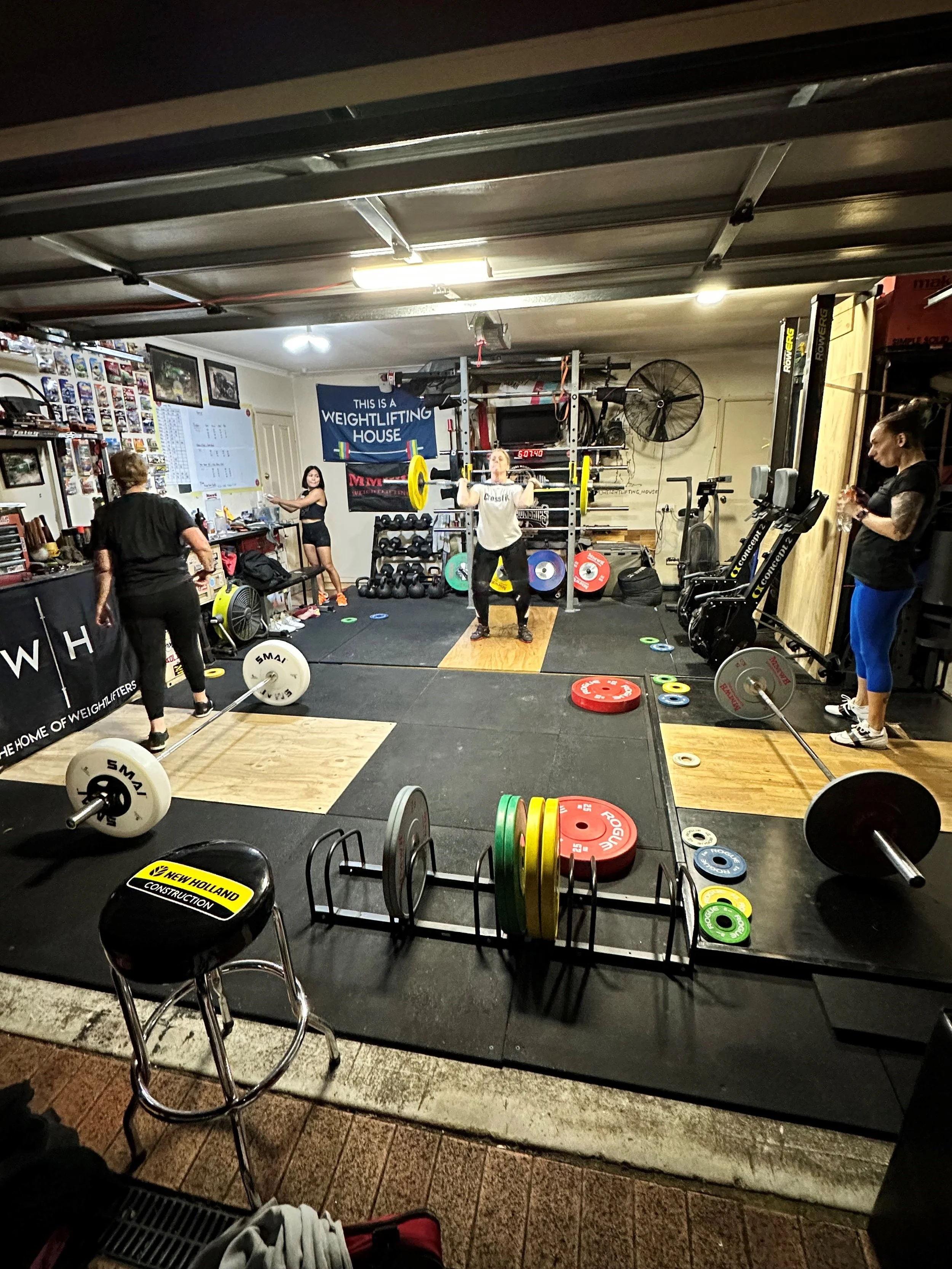
During this time, we have been continuing to coach, build our business and accumulate a huge amount of equipment, as well as the 40ft container we have coming from our equipment supplier. All whist this has been happening Ann has been gaining weekly coaching experience at Crossfit Marrickville, Dave the owner is one of the longest affiliate owners in Australia and when we approached him, he jumped at the chance to pass his and his team’s knowledge on to her. The choice to gain coaching experience out of the area we live, train in was done purposely, this was done to ensure the confidence in approaching, coaching, and offering feedback to complete strangers and stepping outside one’s comfort zone.

Step forward to 2 days before Christmas and picking up the keys to a 366sq/m factory complex which we now call Crossfit Camden Valley and the new home of MMWH, over the first 10 days we hired trucks to move equipment, built the only true Weightlifting facility in the area with goals to have that old school vibe, as well has train, coach and allow people in before we even open full time in March 2024..
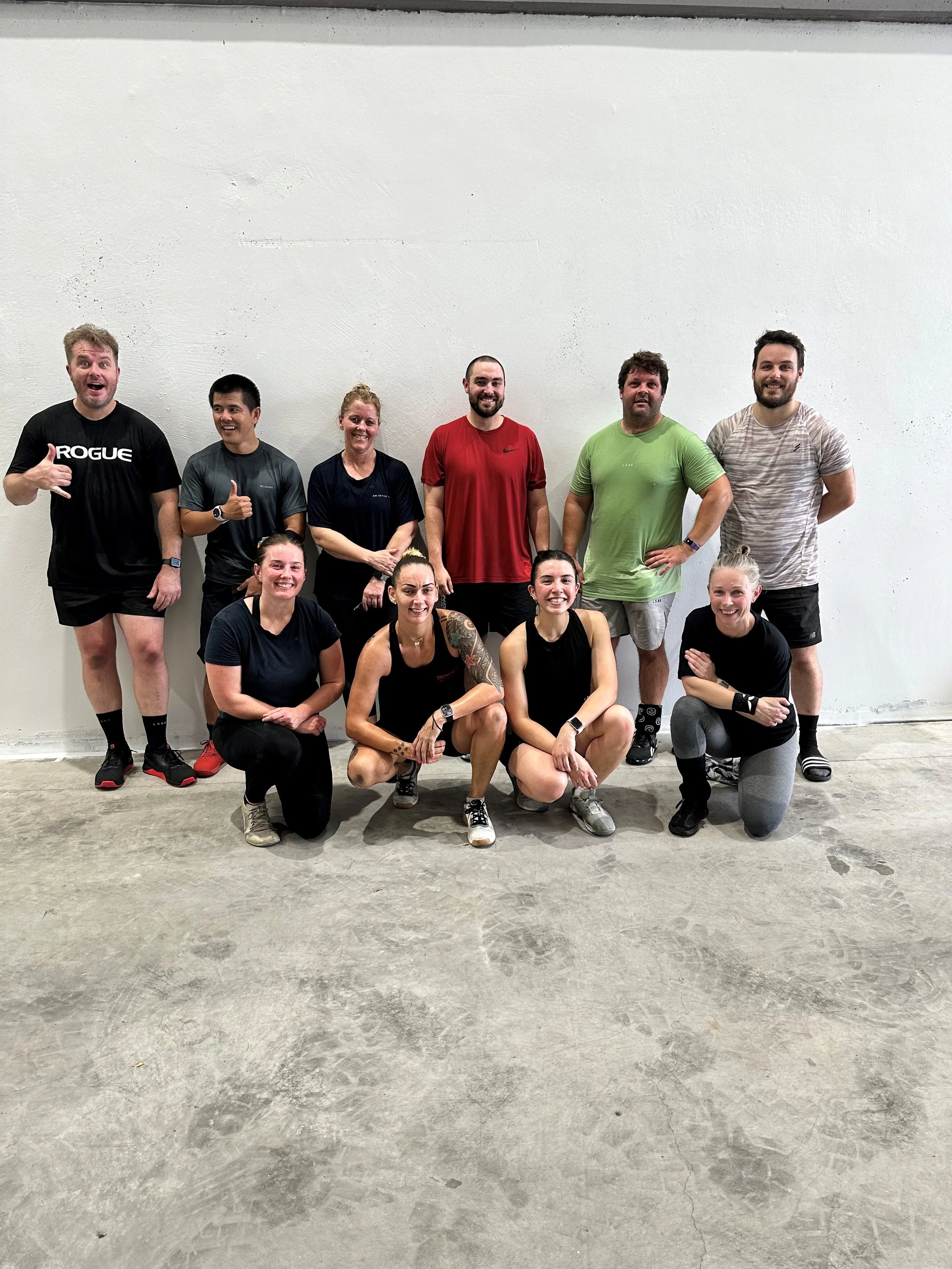
The comment daily is said to me “ do you ever sleep, there is something new or changing every day”, there is something new every day because we have a plan, a goal, and a purpose.. one step at a time we will create what we set out to create nothing less. Our competition is ourselves, to meet the expectations of what we have set out to achieve.
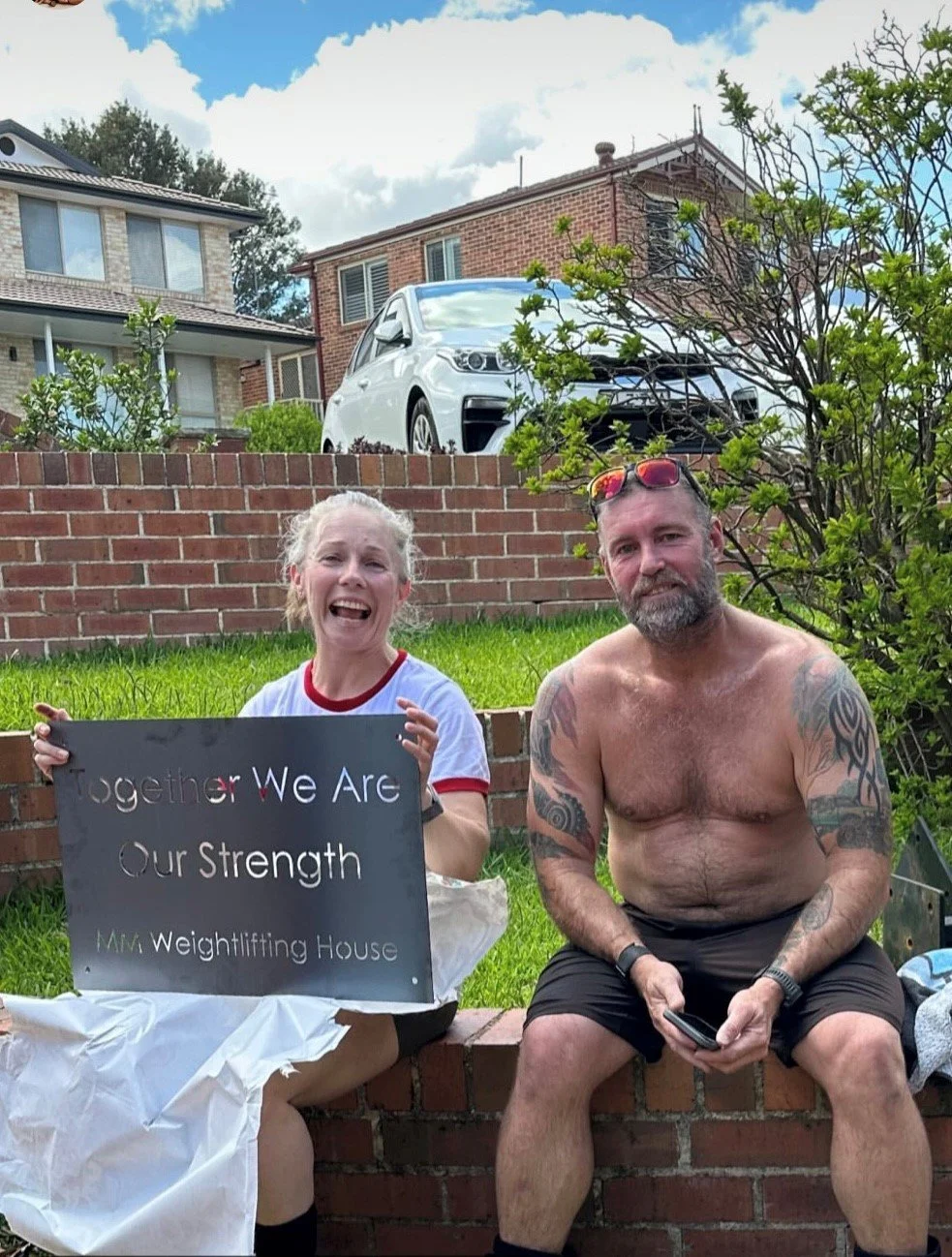
“Together we are our Strength” is a moto that was given over the past few years and one we will continue to stick by.
Puberty, Skinny Fat and the Journey to Eating for Performance
I was 14 when I first became conscious of my weight. It was 1995. Mum bought me a pair of Levi 501 – second hand, you could buy them pre worn from Grace Bros back in the day. They were ladies size 11.
Puberty saw a massive growth spurt. I remember having boobs overnight – I was instantly wearing a 12B size bra and I was embarrassed by them. I spent much of that time wearing a long sleeve loose stussy shirt with a long flowing skirt (that my mother wore leaving for her honeymoon) or a flannelette long sleeve shirt and a pair of second hand corduroy blue pants, whatever I wore paired with eight hole cherry red doctor martin boots.
I was, I am short, 5ft 2 and a smidge and felt frumpy. I was 54kg.

For context 1995 was the height of Kate Moss and waif thin heroin chic. That’s what on the runway, in the magazines, in Hollywood. Kate Moss was 47kg and taller than me and I was 54kg.
If Kate Moss could be 47kg why couldn’t I be? And so that was my mission.
My weight through the years fluctuated between 48-51kg and I never gave it much thought. I didn’t exercise but I was also in my twenties, a stable skinny fat petite and you can really eat and drink whatever you want without much consequence at that age.
2014 I experienced a separation and divorce and enjoyed a high stress 5 months, lost all appetite and ability to sleep and got down to 43kg. I wasn’t skinny. I was sick. Interesting things happen when you are that small that people don’t always talk about. Your skin is terrible, your hair falls out, your nails are awful, and you are always tired.
But I was proud. That sounds ridiculously mentally ill, doesn’t it? 43kg literally skin and bone, fitting none of my clothes and I was quietly thrilled at the thigh gap I had. My hip bones stuck out, you could see my ribs, front and back, my collar bones were very visible, and my only thought was “look how thin I am.”
Fast forward 18 months after I had got my head around my new situation and had put my weight back on in the form of cheeseburgers and beer I started to exercise and without fuelling adequately started to lose weight again.
And this is where the narrative started to change but learning to fuel around a workout and learning to gain weight without the knee-jerk negative response is challenging. To feel good, perform, sleep better, recover better, repair, you need to fuel. There is no way around this.
Once I started to fuel myself adequately, I started to gain muscle and my weight increased. My automatic response when I stepped on the scales to see a gain was negative. Was I stronger? Yes. Did I feel frumpy? No. But the scales are not subjective like that and in my brain heavier just equalled fatter.
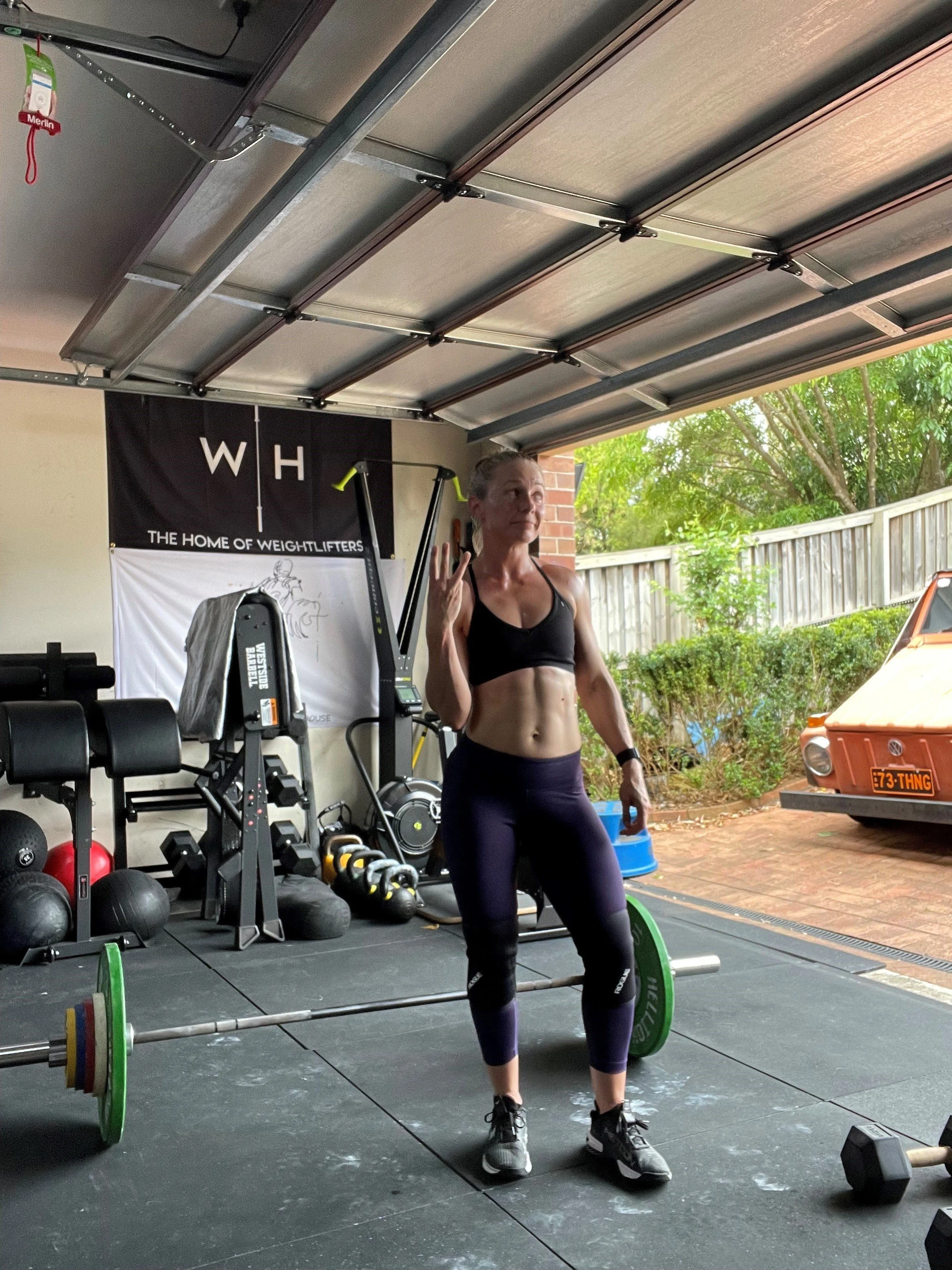
I love seeing jacked women, the Tia-Clair Toomeys of this world and I understand they don’t weigh the same as Kate Moss but I am creeping up to the heaviest I’ve ever been and its scary. It remains this mental hurdle and I don’t think I am alone in this.
How do we fix this? I don’t have the answer, but I can only create an environment of positive reinforcement, encourage other women, compliment other women in my own backyard.
So, to all the women reading this know you are so strong, you are so fit, and you are making progress and we are going to change this mindset together.
Female athletes and MM Weightlifting House
Female athletes and MM Weightlifting House, the theory behind why we have attracted so many female lifters to our garage.
When Ann and I decided to open MM Weightlifting House as a business we never expected the outcome of what we have today in a short 3 months.
When we started, we already had 4 lifters, 3 which compete under MMWH Banner and 1 under Illawarra Weightlifting, since going live with our website we don’t have a spare afternoon/night free, whether its one-on-one sessions, a group class or couples session in the garage with people also on waiting lists for spots to free up.
But here’s the kicker.. from what has grown from 4 lifters is now close to 30 regular lifters in this short time, that attend these classes, and over 90% of these are female. Our females age from 11yrs old to 72yrs old. Out of the 30 lifters currently only 5 compete, all the others are doing it to improve themselves, help with other sports they do, or just because they love it and want to learn more.
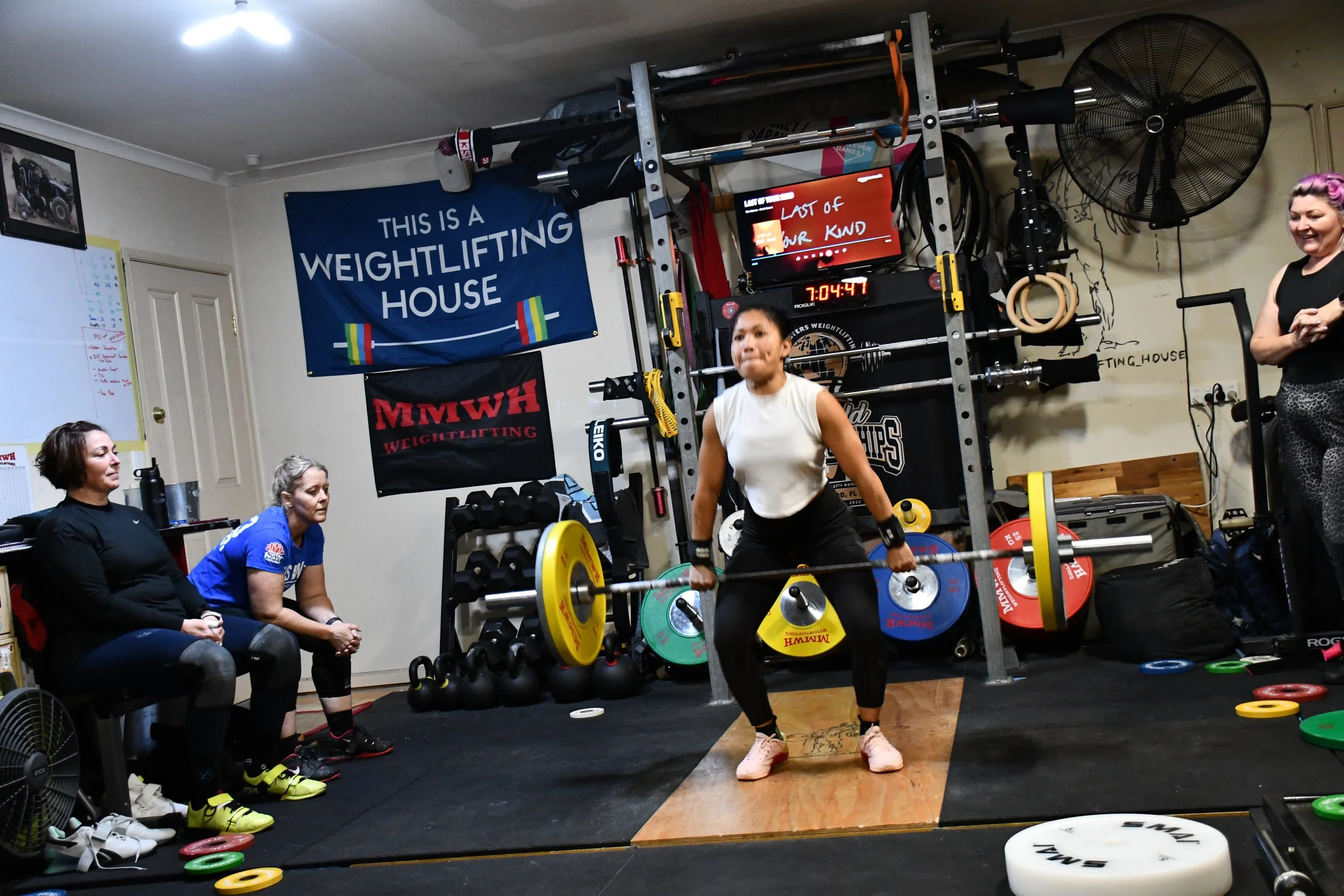
So why MMWH and why so many females, there is a few reasons that come to mind, firstly both Ann and I are in our 40s, so we are very relatable, and we have life experience outside the fitness world. Secondly in the Camden and Macarthur area there is no specific weightlifting gym, nobody that consistently holds classes multiple times a week like we do, we cater to small groups only so we can spend time with everyone unlike large group classes. This enables us to focus and build that relationship with each and every lifter, breaking their movements down piece by piece, with aids such as blocks of various sizes, and movements that typically they would have never done at there local functional fitness gym to isolate different sections of the lift to help them improve and gain more confidence under a barbell.
With a lot of the MMWH females over the age of 40 this is also something we take into consideration in how we run program our classes. Most masters athletes can’t bare the loads in which the younger aged can, so when it comes to programming this needs to be highly considered. We also encourage our ladies to attend the Women In Weightlifting Events held by Vanessa Kerr and NSW Weightlifting to which they have speakers and athletes talking specifically about women and training around the female body. The last event which was held in June, 6 of our athletes attended with very high recommendations to all the other females they talk to regarding these events.
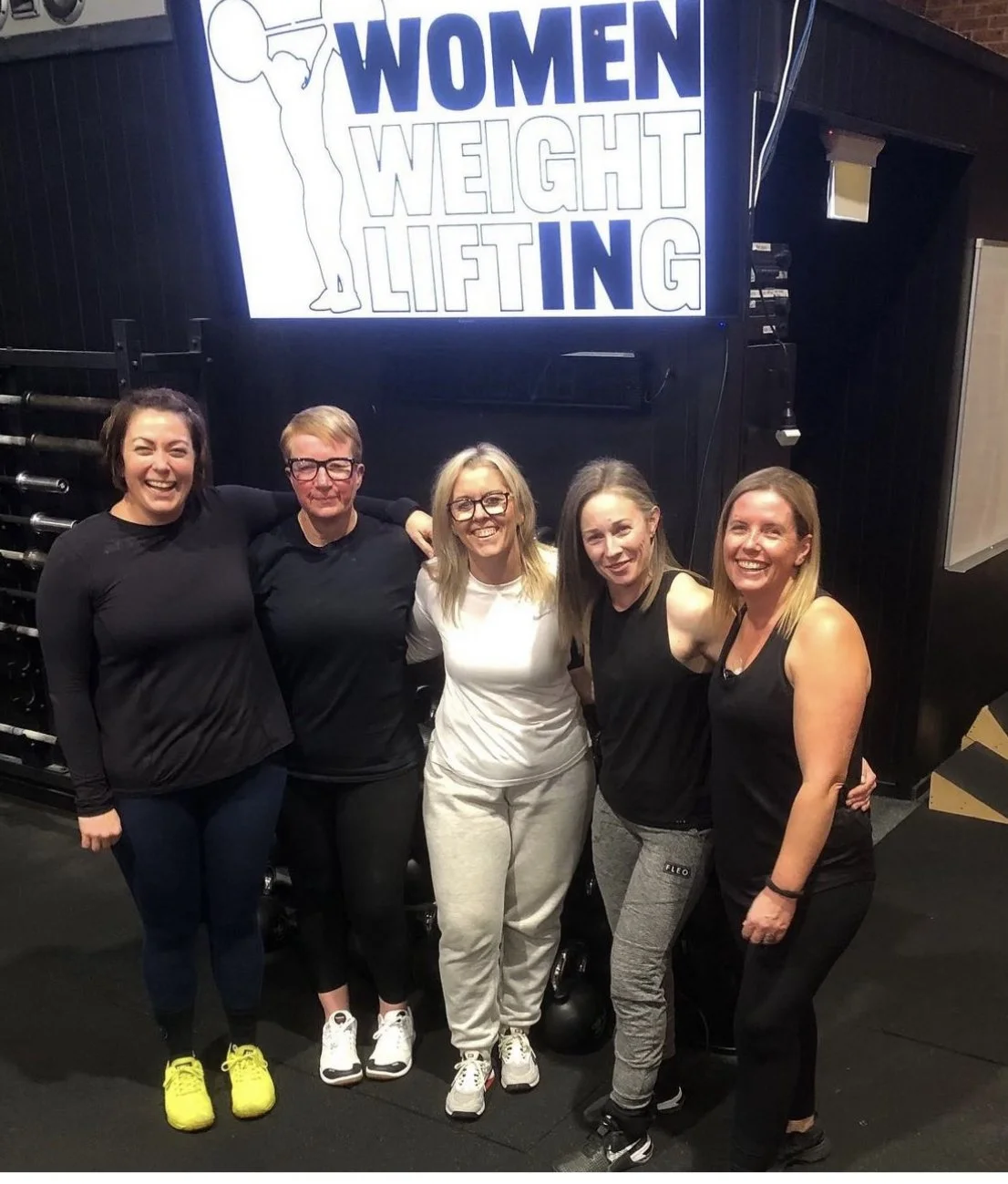
We have had the discussion with many of our regulars and the same thing is always said “there is no pressure”, “we don’t rush the warmup”, “we aren’t forced to add more weight, its about getting right technique”, “we can be ourselves here”, “we get coached in a way we understand what is being told to us”.
These last 2 points directly link back to our core values:
To create a nurturing environment to foster self-development and health allowing members to thrive in all aspects of their lives outside of our garage.
To provide a space of encouragement and acceptance without judgement.
To approach weightlifting, strength, and conditioning without blinkers
To value longevity over today’s performance.
To challenge self-imposed limitations.
MMWH will only continue to grow within the Camden, Macarthur region bringing weightlifting to all those who want it in a hassle-free environment.
Flick the switch
In May 2016 I was doing boot camp classes, jogging the four-hundred-meter block with a log above my head, push ups, light kettle bell work that kind of thing.
And then 98 Riley Street posted a FYF workout.
300 burpees for time. 5 body weight deadlifts at the top of every minute.
Yes. Read that again.
300 burpees for time. 5 body weight deadlifts at the top of every minute.
Sounded nuts. Sounded a thousand times harder than anything I had done but I was curious.
How would it feel? Would I finish or give up halfway through and go home?
I roped Matt into doing it with me and I didn’t give up.
I scaled to one deadlift on the minute and did what my brother in law affectionately refers to as “Harry” burpees (half rep Harry aka bootcamp style burpees) and finished in thirty six minutes and ten seconds but something changed for me that day.
I wanted to do hard things. I wanted the workout that seemed ridiculous on paper. I wanted to feel uncomfortable with that little bit of panic when you’re up to your neck in it and you realise you can’t touch the bottom because that’s where the magic happens.
That day also signalled the start of my interest in 98 training, programming, mindset, and philosophy which led me to attend their first publicly available 98 Training Academy May 13 -14 this year, almost exactly seven years after the 300 burpees.
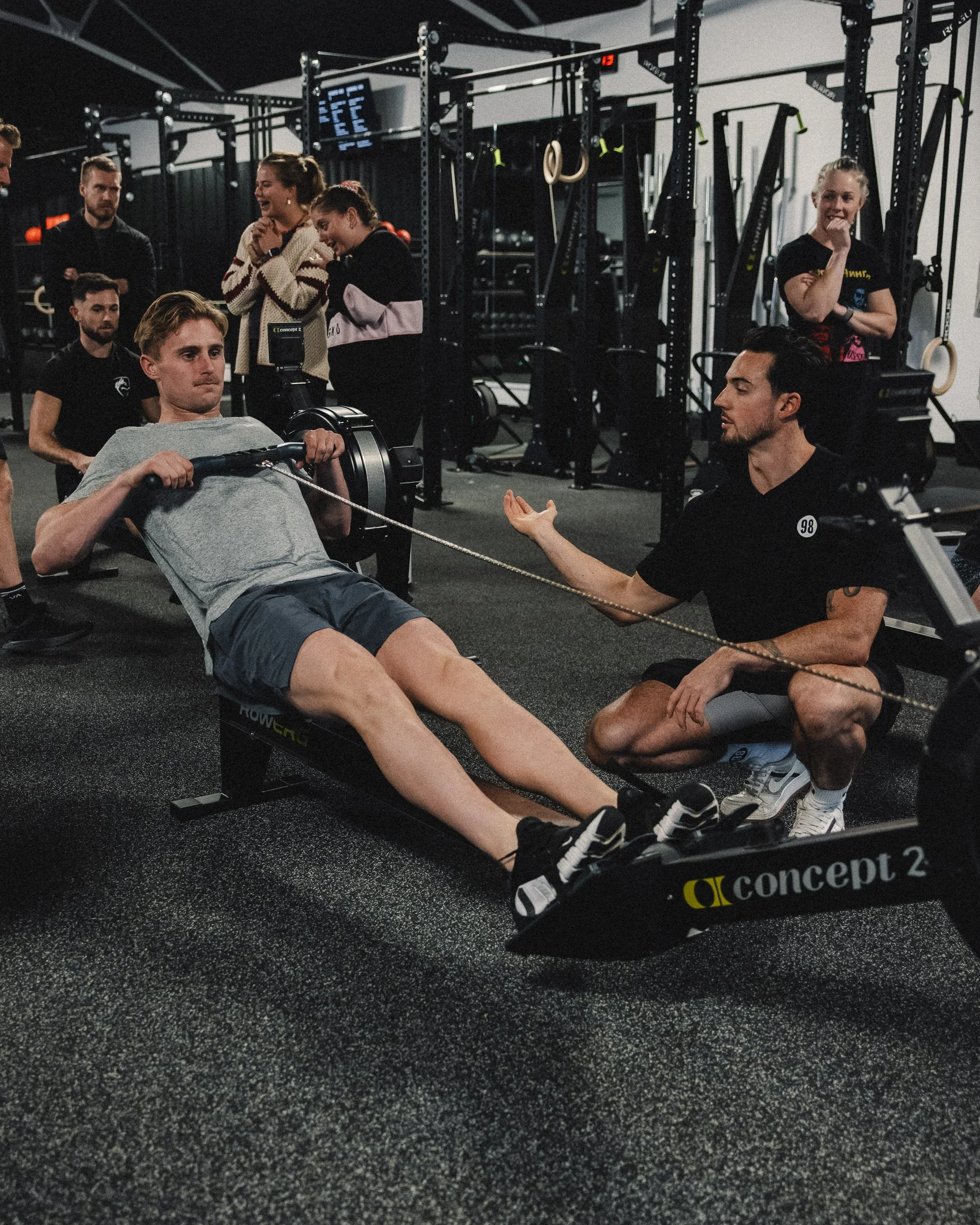
The weekend was held at 98 Sydney inside The Royal Hall of Industries Moore Park. Across the two days talks included the 98 philosophy and history, energy system development, mindset, recovery, programming, periodisation, nutrition and communication with practical workshops and workouts on hinge, concept ergs, esd and of course a FYF finisher.
To say I am grateful for the opportunity to attend would be the understatement of 2023. The take aways and the (as Oprah describes) Aha! moments were worth the effort alone, most notable the mindset piece by Daniel Cooper.
Professionally I struggle with taking chances. I am not an entrepreneur and I fear the consequences of failure. Daniel Cooper spoke of reframing situations as challenges instead of threats.
This resonated with me.
My Aha! came with the realisation that I choose discomfort and challenges in workouts but not in my professional life outside of the gym. Why? And what am I missing out on? Is the chance of failure, packing up and going home, worth the chance of not experiencing and sharing something amazing?
In one sentence Daniel Cooper forced me to reflect inward with the aim of approaching professional challenges with the same excitement as I do 300 burpees and for that I will be forever grateful.
This is only the beginning for 98 Training Academy. If you are passionate about human performance, longevity, movement, and communication I implore you to seek out and attend their future weekends.
Ann
Photographs by James Seneviratne @jamesjoel
Never stop listening.
Never stop listening.
I do start a lot of sentences with “I was listening to a podcast and..” in fact it’s almost comical.
To be fair, I listen when I am walking Rory at five am and I spend a lot of time in the car – anywhere from an hour forty to two and a half hours every day Monday to Friday so I have a lot of time to spend, and I try to be thoughtful about how I spend it. Sometimes I listen to learn and retain, something I listen to fiction to escape and sometimes I just need a laugh. If you are looking for a good listen this list may help.
Here is a list of my favourite podcasts right now and audibles I have found both informative and entertaining. Enjoy.
Favourite Podcasts Right Now:
Andrew Huberman, Ph.D. @hubermanlab
Neuroscience Professor and Lab Director at Stanford University.
* Special mention to the six-part series on fitness, exercise and performance with Andy Galpin, Ph.D.

Peter Attia The Drive Podcast @peterattiamd
MD focused on longevity science.
Joe Rogan @joeroganexperience
Comedian, Podcaster, UFC Commentator.
Your Moms House – Tom Segura and Christina Pazsitzky @ymhstudios
Comedians, Podcasters.
Jock Unraveling, Jocko Podcast @jockowillink
Retired Navy Seal Officer, Podcaster, Author.
Chasing Excellence @benbergeron
Ben Bergeron Owner of CrossFit New England, Comptrain & Patrick Cummings
Whoop Podcast @whoop
Hosted by Will Ahmed CEO of Whoop with guest.
Favourite Audibles:
Extreme Ownership By Jocko Willink and Leif Babin
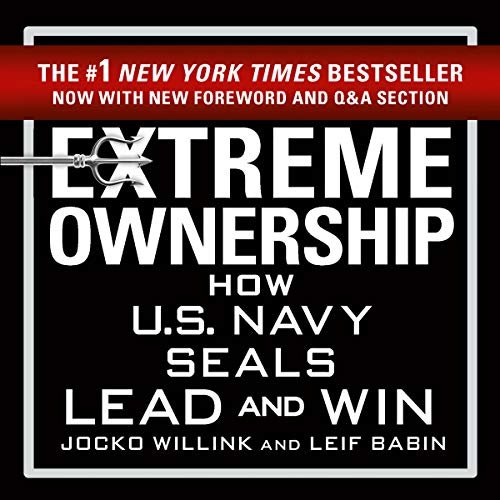
The Dichotomy of Leadership By Jocko Willink and Leif Babin
Leadership Strategy and Tactics By Jocko Willink
Essentialism By Greg McKeown
Can’t Hurt Me By David Goggins
Never Finished By David Goggins
Outlive By Peter Attia, Bill Gifford
Chaos By Tom O’Neill, Dan Piepenbring
Shoe Dog By Phil Knight
Greenlights By Matthew McConaughey
Stay curious, keep listening, keep learning.
Ann
Proving a point
Everyone knows I train weightlifting that’s a given, I follow a weightlifting program 6 days a week and have for well over 2yrs now, After World Masters Weightlifting Championships in Florida in 2022 I decided I would enter 2 online crossfit comps, these would be first the Masters League Championships, then the Crossfit open. Both I set a goal of making the next stage. Changing very little to my normal 6 days weightlifting, the only thing I added was 1-2 40-50 min functional workouts on top of the weightlifting each week.
The open I was 1% outside the top 90% in ANZ so I missed that goal, but I had already made the Masters League online comp to qualify for the face to face state championships. This was held Sunday the 7th May. After being away the week prior for work, no strict diet, beers every night I went into the day with one goal and that was to win the snatch complex which wasn’t till last.
Event one was broken into two parts A & B, consisting of Max front squats at 65kgs in 2mins, I placed 2nd over all in this event and Part B was 10-8-6 clean and jerks and chest to bars which surprisingly I took the event win after not even attempting a chest 2 bar for a long long time..
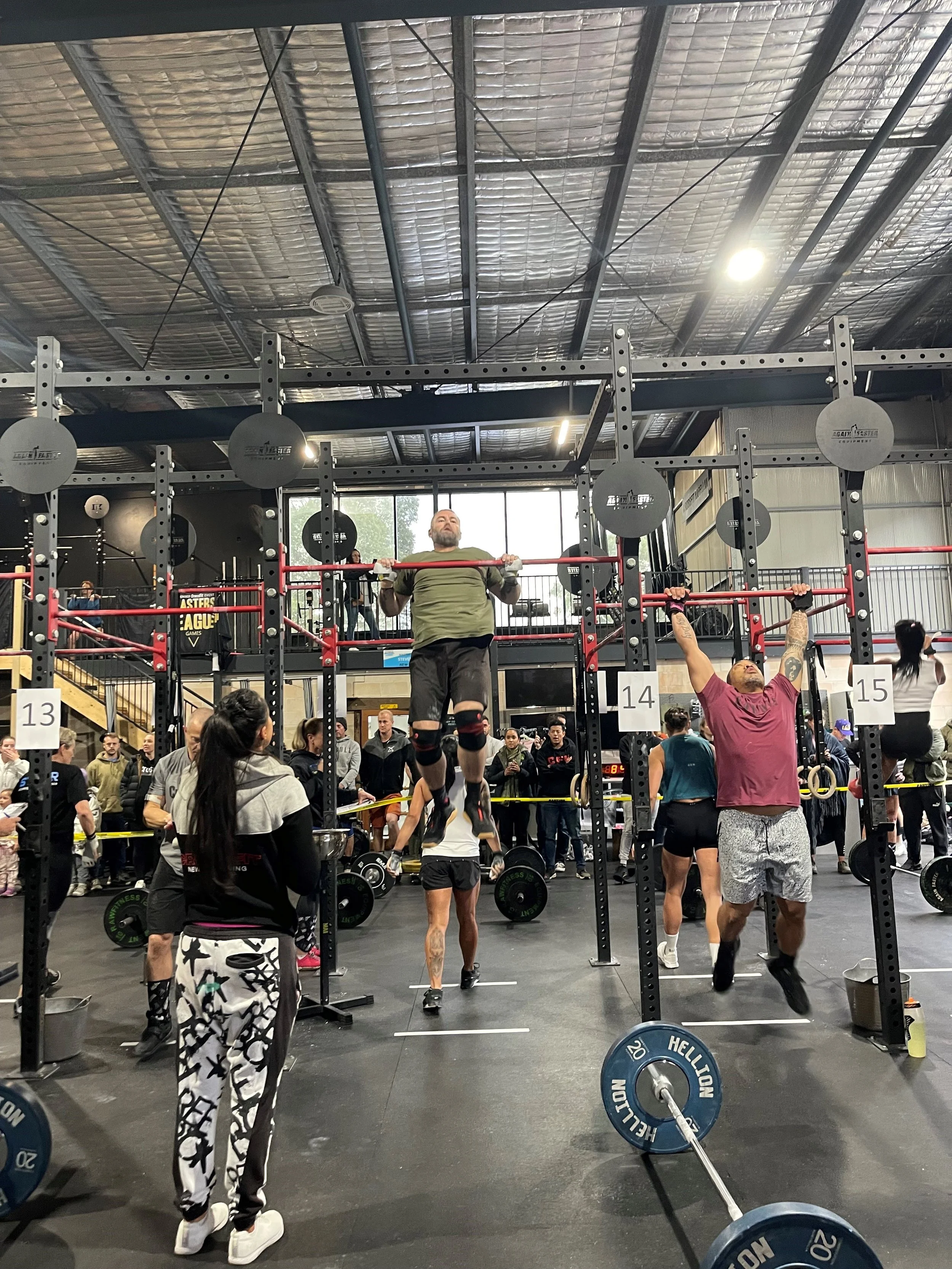
Event two was truly not well thought out correctly, people everywhere, heats with more people than what they should have been leaving me without a Box in the second 2 mins of max box jump overs.. I rarely lose my cool these days but I went off which I later apologised for to the poor guy who copped the brunt of it.. so I had to wait a few minutes until I continued the workout completely out of sync to my heat.. The workout was 2mins on 1 min off max wall balls, box jump overs, devils press and wall walks. The first two movements my favourites second two horrible, thankfully I did enough reps to be well clear of the field in these 2, hitting 50 unbroken wall balls with a total of 59, then 51 box jump overs in 2mins, and held on for event win number 2
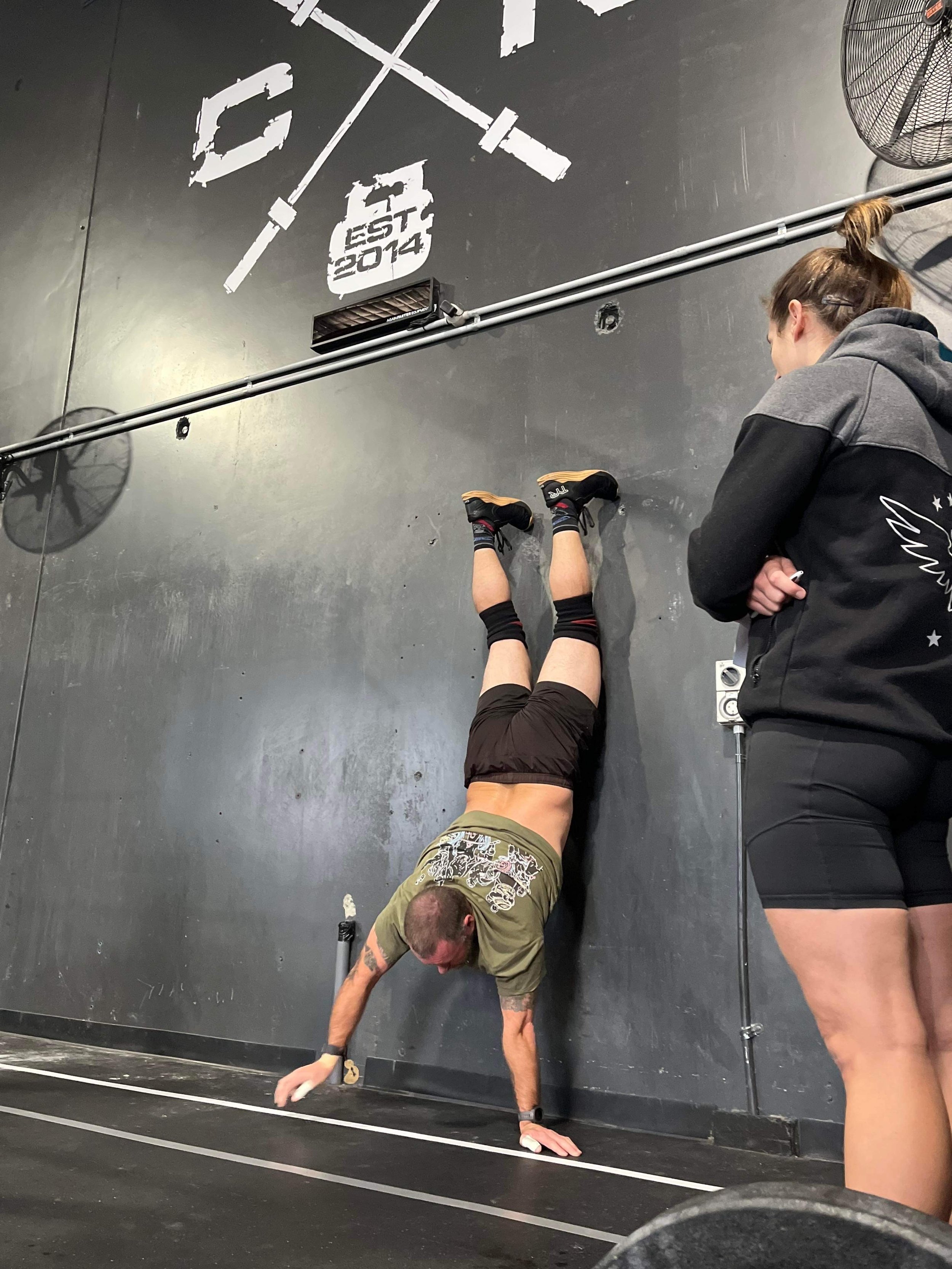
Event three.. knowing this Part A was going to be my worse finish of the comp before I went in, I made a decision I would stop at the 9min make of the 10min cap of 25-20-15-10 deadlifts and Toes 2 Bar, I stopped with 30sec on the clock with 7 reps remaining of last set of T2B.. Gymnastics not my strong point being a weightlifter. This decision was made to try and get my heart rate back down for the snatch complex. 70kgs was still on the bar so I snatched that as a single just to get the movement, then changed it to 80kgs for the first complex attempt.. my first attempt was 20kgs above everyone else in the heat and I could hear the spectators in the crowd talking about the weight.
The complex was Snatch + 2x Hang Snatch + 3x Overhead squats, it was brutal. Making the 80kgs flow I had one attempt left in me before the 5min cap was up. We loaded 85kgs, again you could hear the people around me including the competitors in my heat as they watched me comfortably snatch the first 85kg from the ground, a cheer from the crowd then into 2x hang snatches and the crowd was getting behind me, into the 3 OHS which was when the complex became brutally hard. Stumbling forward in the 2nd I regained the stability for the final OHS, I wasn’t failing this now.. sitting in the bottom of the squat for what felt forever before standing it up, waiting for my judge Jimmy to say yep and a big bar slam to not only take the win in my age group for this event but the highest recorded complex of the day across all age groups within NSW.
This experiment was to prove, strength training holds a lot more cardio stamina and you don’t need to do cardio every day to be competitive in the functional fitness world if you combine both Strength training and cardio..
The weightlifter won 3/5 events for the overall win within NSW 45-49yrs olds booking a ticket if I choose to go to #newzealand to compete in the finals.
2023 NSW State Masters Championships
NSW State Masters Championships were held over the weekend (28th-30th May), with over 150 athletes it was a massive weekend.
The MM Weightlifting house team was on fire, leading off the charge with Sam taking to the stage Saturday morning at 9am, this was Sam’s first state event, there was lots of nerves and with 14 females lifting Sam had a long wait before she even needed to touch a barbell to start her warmups.
Once we picked the empty barbell up we where focused, with the opening lift recorded at 38 kilos our warmups where going well so we bumped it to 40kgs to open our assault on winning the State title. It was always going to be a battle between Sam and Leisa from rec gym, Leisa opening 3kgs more than us in the snatch. Sam went 3/3 ending on 46kgs for a new 4kg Pb and the NSW State record, while Leisa went 43kgs missed 45kgs then hit 46kgs to go into the clean and jerks equal. Opening with the largest C&J of the session and 5kgs above Leisa we remained focused and came out after another long weight with 3/3 again in the C&J ending with a 3kg Pb at 65kgs and 111kg total for the Gold and 2 state records.
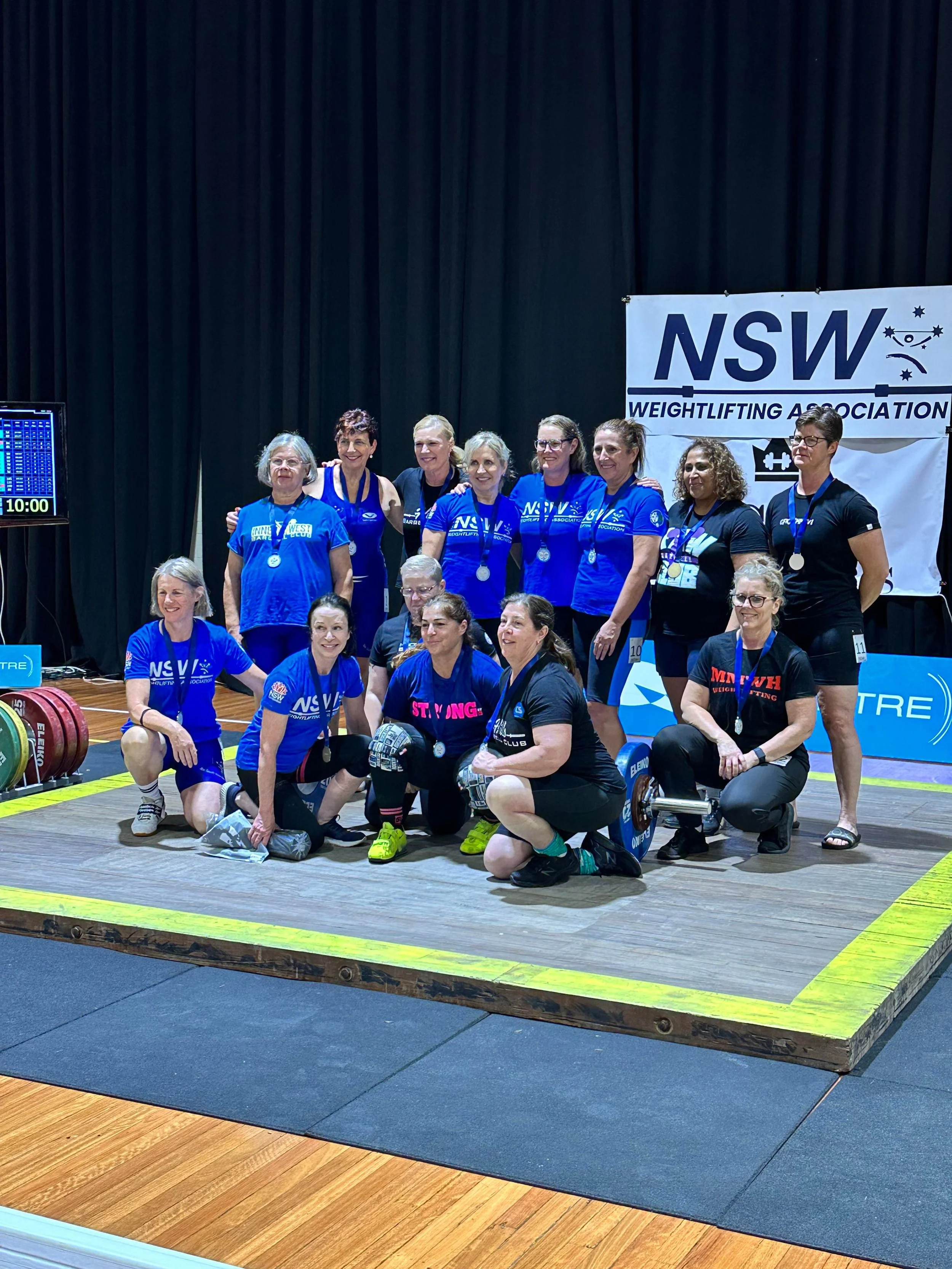
Kelley’s weigh-in wasn’t till 12pm which gave her time to sit relax and watch how things work at a State championship. Again, this was Kel’s first big event, after 500 nerves wee’s we were ready to warm up, Again we bumped Kelley’s opener up in the back room as she was making everything look easy, there was lots of nerves from this lady, but as a coach its your job to calm her, settle her and give her the advice that works for her. Kel was up early in the session of 18 ladies hitting our first 2 snatches and a great high pull on her 3rd, but we walked away with a Snatch pb and gained confidence knowing there is way more to come. After a long wait between lifts, we started our warmup for C&J, Kelly like Sam doesn’t like knowing what’s on the barbell or what I’m changing their weights to on the platform, during warmup Kelley asks me what are we opening at as that warmup lift was 2kilos more than our recorded opener.. my response to her was I know right, her eyes rolled back the nerves smile she gets came to her face and she blurted out Fuck me Matt..
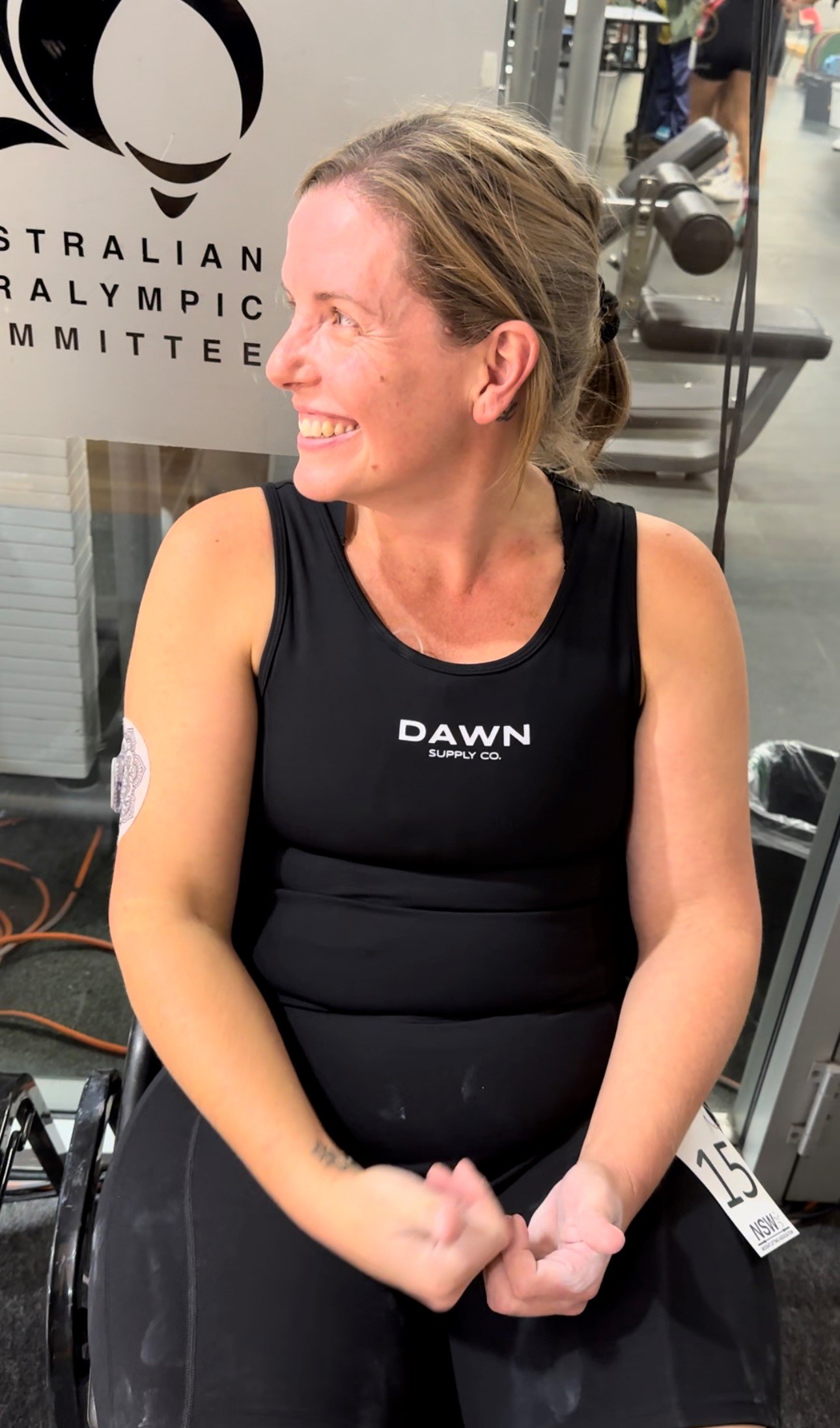
We went up opening at 41kgs, then to 44kgs and missing 48kgs with a small press out in the 3rd was deemed a no lift, Kelley walked of stage and again with the Fuck Matt, but this time it was Fuck Matt I’ve never even considered 48kgs and I just cleaned it..
Then it was the boys turn, with Luke and I lifting in the same session it was going to be a whole new experience for me, as I was coaching and being coached at the same time. With a field of 18 athletes, it made it a little easier as I was at the tail end of the session allowing me to warm Luke up and be with him on the platform while he lifted. Luke’s lead up preparations where great, hitting everything we had programmed him, building confidence in the weeks prior. Warmups went well we opened to 78kgs and walked out onto the platform and nailed it. We went 2 kilos to 80kg, then mind started to kick in and we walked to the barbell with the brain saying one thing the body knowing it can do another.
As a coach this is the hardest position to be in, in my opinion. But we need to be able to calm, refocus and encourage our athlete and make them believe they can and not the cannot. Luke walked back out for his 3rd snatch with a much better head but unfortunately on the day the weight was just too much and was deemed no lift with a press out. Then came the clean and jerk, opening heavier than we ever had in the past 2yrs which shows how much work we have been putting in in our lead up. After smashing our opener those mind games came back when we went out on the platform for the second lift at 108kgs, the minute Luke walked of the platform he knew and was super frustrated, we sat him down, again reminded him the weight is something we have hit time and time again in training, the last lift was just that, in the past and we can not change that now focus to what’s about to happen. We went out for the 3rd and final lift, the clean was easy but a soft elbow giving us a 2/6 day, Walking away with 3rd place something that I’m proud of as Luke coach and something he should be also. We have bad days, but we learn from them, and we grow.
Now for my experience of the session.. Well firstly don’t recommend coaching and lifting in the same session just saying. But my lifters will always come before my lifting in an event. Warming up was a whole new level of stress coaching in between it, but I thankfully have one of the best in the business on my side when it comes to helping me in the back room and have for a while now, NSW and Australian coach Venessa Kerr. Taking care of my warmup times, weights loaded on the barbell and numbers in the backroom. During warmups I was missing lifts and doing doubles at weights I was meant to be doing singles at because of the amount of things happening in the background. Missing 90kgs in the back room made me sit, breath and gain focus.. that’s a weight I don’t miss in warmups.. 93kg warmup snatch felt back to normal going out opening with 95kgs. Perfect, it felt awesome. There was 3 lifters all floating around the 95-97kg range and Ness and I decided to get out of all the backroom swapping and changing and went to 100kgs for my second lift, we missed 100 and 102kgs but we had one on the board and that’s all that’s needed.
Clean and jerks same situation in warming up as Snatch super busy with coaching duties but got to focus earlier as I was warming up after Luke had lifted this time, we opened conservative at 120kgs, then did 5kg jumps 125kgs -130kgs. 3/3 in the clean and jerks was a great result as I haven’t hit 130kgs in over 5mths in training or on a platform. Walking away with a 225kg total and eligible for Senior State titles.
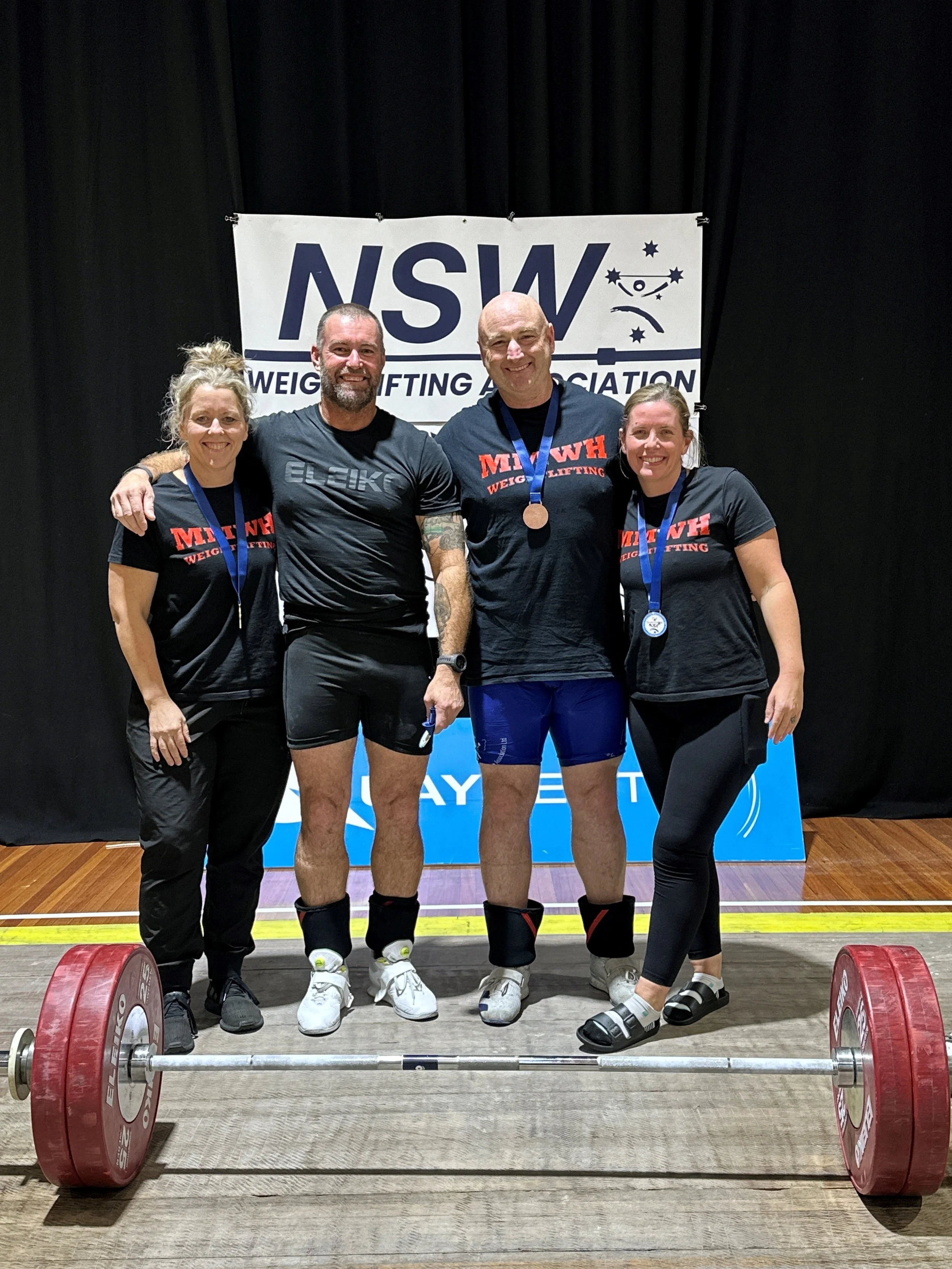
Over all a fantastic outcome for the MM Weightlifting Team, well done to all lifters across all sessions over the weekend.
Injury, Nerve Pain and Learning to Check My Ego
Injury, Nerve Pain and Learning to Check My Ego.
My neck isn’t great.
I recently saw a Facebook memory from 2009 (massive cringe by the way) complaining that I had hurt my neck and couldn’t move, pulling “something” after picking up a puppy. Bouts of this would come and go, never lasting for more than a few days. This is normal.. right?
While I was still at boot camp in 2016 I started to experience what felt like fatigue in my left arm.
Down my arm, into the elbow and across the top of my forearm. I ignored this for a while. Until I couldn’t and went to a physio who to their credit directed me to my GP for a referral to have a CT on my neck.
C5/C6 mild to moderate broad based disc bulge.
C6/C7 moderate left posterior disc bulge. The disc is indenting the left anterior part of the thecal sac. There is a likely encroachment on the left C6 and C7 nerve root.
Tops.
I was given exercises, slow-release anti inflammatories and told to limit overhead exercises.
I continued to go to the gym but felt useless and deflated as I scaled and changed movements for every workout. From being enthusiastic and bouncing with excitement now my attitude had changed to “Great, what can’t I do today?”
Knock knock. Who’s there? Ego. Ego who?
I stopped going to the gym and walked my weimaraner twice a day for 3 months and my arm was feeling better, but I was bored.
Matt swapped back to CrossFit and was enjoying it and I was now a “walker”.
By January 2017 I was sure I was cured. I had rested, done the exercises, that’s how this works right? I plucked up the courage and started Crossfit. I explained my arm/neck situation and that I was “managing it.” I assured my coaches I was fine, but I was pushing it hard, and by April 2017 my left hand was so numb I could hardly grip the pull up bar. I would keep trying to shake it out, shake some kind of feeling into it. Shortly after bouts of numbness, flames started shooting down my arm and out my fingertips. You know you are alive when your arm is invisibly on fire. All the time.
Now whatever is the worst pain you have ever experienced is the worst pain YOU have ever experienced. Some people will have the fortune of their worst pain being a stubbed toe and if you are one of those people, you my friend are blessed. Nerve pain is different. If you have ever experienced bad nerve pain, there is no way to describe it.
After eating Panadeine Forte like tic tacs I was eventually put on Lyrica which works great for nerve pain but unfortunately feels like I’m six beers deep, slow, with brain fog. I would take it once I got to work because I couldn’t drive on it, but it worked, and it stopped me from going insane and committing murder. Lyrica, for me, however, could not be a long-term solution.
Cortisone injections were suggested to me, and I was willing to give anything a shot (no pun intended). I was given two injections C5/C6 and C6/C7 although most of my symptoms were linked to the C6/C7 encroachment. Cortisone changed the game for me and within a week, or so, I was pain free. I understand they aren’t as successful in every case, but for me – they were magic, and my first lot of injections lasted over twelve months.
After twelve months I do get flare ups. It’s a bit of a borrowed time scenario. I know how it feels when they are coming on, starts with elbow pain then down the back of the arm and then numbness in the hand but I try not to let it get to the flames stage and book myself in for another jab with time to spare.
How does my training affect my neck? I get asked this mostly by people that do not go to the gym and the answer is – it helps. Each scan of my neck shows improvement. What started off a moderate and a mild to moderate bulge is now one mild bulge C6/C7. Exercise has strengthened my neck and surrounding muscles supporting my spine. What’s that saying? “Being weak is more dangerous than getting strong.”
How does my neck affect my training? A bit. I am slow as all heck with hand stand push ups, slowing lowering my head to the ground, trying to protect my neck. I also spend extra time warming up my shoulders either with a broom stick, bands, or a few minutes on the ski erg when we do high rep overhead work. I find keeping the area rolled or gunned helpful also.
One of my biggest hurdles is still my ego. Managing an injury for an extended period is frustrating and can be extremely humbling, I am getting better at it, but I still have my moments. I am still learning its ok scale something I am usually proficient in and enjoy or can taking a day off and rest if that’s what my body needs (which is harder than it sounds).
I also practice gratitude. I am one of the lucky ones. I am unmedicated. I am non-surgical, and I am not in chronic pain.
And that’s not too bad for an old bird with a bad neck.
-Ann